If you’ve ever felt like you’re sending out volunteer requests into a black hole… you’re not alone. It is hard to recruit school volunteers — not because parents don’t care, but because everyone is overloaded, unsure what’s expected, or afraid of getting stuck with too much.
The good news? You don’t need to beg, guilt-trip, or send 12 reminders.
You just need clarity, simplicity, and the right approach.
Here’s exactly how to recruit school volunteers in a way that feels good for everyone.
Table of Contents
What Makes Parents Say Yes?
After years of running events, these are the top reasons parents volunteer:
They know exactly what they’re signing up for
The job sounds simple and manageable
They know the time commitment
They understand the impact
They feel personally invited
Small changes in wording can make a huge difference.
“We need two helpers to hand out popcorn from 5:00–6:00. Everything is prepped and ready.”
Be specific, warm, and pressure-free.
3. Send Requests Personally
Ask teachers to share the request. Or send through the school’s official communication channel.
Parents read messages from teachers more than from the PTA.
4. Use a Simple Sign-Up List
Google Forms or SignUpGenius works perfectly. Avoid spreadsheets that break on mobile.
5. Make Volunteering Social
Parents love:
buddy shifts
class challenges
grade-level competitions
“bring a friend” shifts
Volunteering feels less intimidating when it’s shared.
6. Highlight the Impact (This Matters)
Examples:
“You helped 150 students shop at the book fair today.”
“Because of you, teachers had a quiet lunch.”
“Our fun run raised $18,000 — thank you!”
Highlighting impact is one of the most powerful ways to motivate and retain volunteers. When people understand the real difference their time makes — how many students they helped, how their effort supported teachers, or how the school community benefited — they feel connected, appreciated, and more willing to help again. Impact turns volunteering from a task into something meaningful and energizing.
The best way to share impact is through simple, specific, real examples. Instead of general “thank you for helping” messages, try: “You helped 150 students shop at the book fair today,” “Because of you, teachers had a quiet lunch,” or “Our Fun Run raised $18,000 — thank you.” You can also highlight who, exactly, benefited: students who normally don’t shop at the book fair, teachers overwhelmed during busy weeks, or families who received holiday support. Volunteers respond strongly when they can visualize the people they helped.
Finally, frame volunteering as part of a larger ripple effect. A one-hour shift at the supply drive helps restock classrooms for weeks. A single morning at Muffins with Mom can help 200 families start their day with joy. A few route monitors at a bike parade help create a memory kids will keep forever. When families see how their contributions fuel broader school programs and events, they feel proud of their role — and they return because they know their time matters.
7. Say Thank You Often
Small gestures → big loyalty.
Thank-you posts
Quick photos
Shout-outs
Volunteer spotlights
People return when they feel appreciated.
Common Mistakes to Avoid
“We need HELP!!!” messaging
Sign-ups with no role descriptions
Asking for too-long shifts
Last-minute requests (unless truly necessary)
Making volunteering feel exclusive or cliquey
Recruiting school volunteers becomes simple when you communicate clearly, offer small commitments, and show genuine appreciation. Parents want to help — they just need the right invitation.
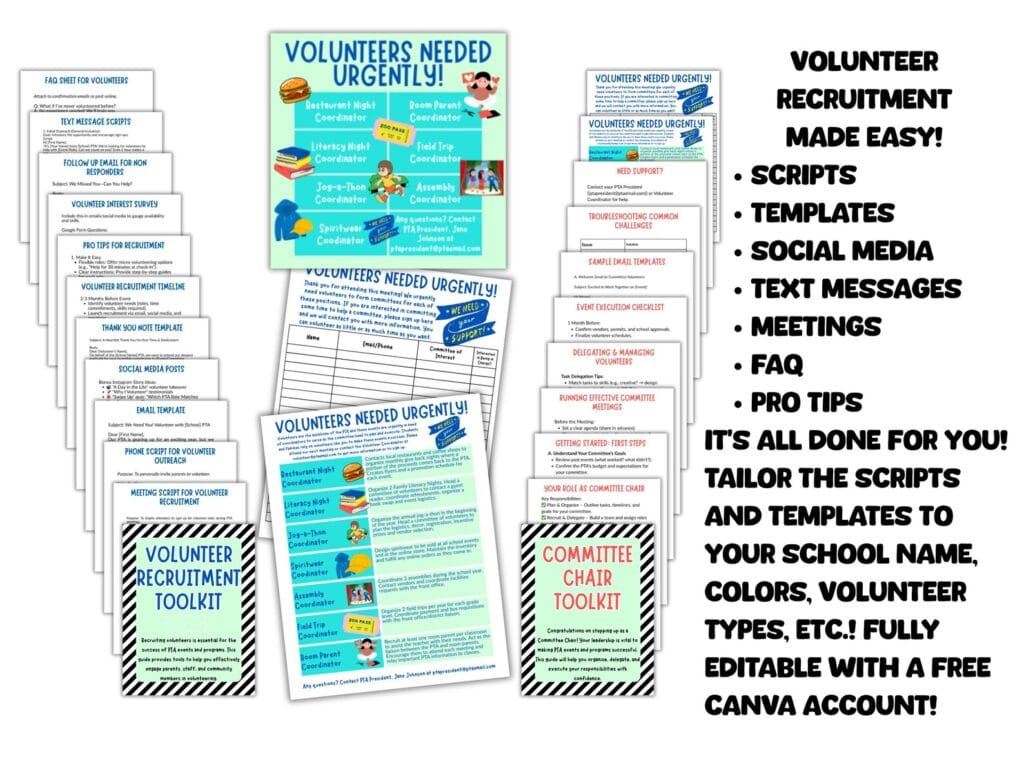
Follow this link to my Volunteer Recruitment Kit so you don’t have to reinvent the wheel! Follow scripts and send emails that are already done for you! Just plug in your specifics!
Showing meaningful volunteer appreciation doesn’t require a big budget, fancy gifts, or elaborate events. For most school volunteers, the most powerful recognition comes from simple, thoughtful gestures that make them feel valued, seen, and connected to the school community. PTA and PTO leaders often worry they don’t have enough money to thank volunteers well—but the truth is, appreciation is more about intention than expense.
Whether you lead a large parent group or a small, rebuilding PTO, this guide will show you practical, affordable ways to express gratitude that truly resonates. These ideas help strengthen volunteer retention, boost morale, and build a culture where parents feel excited to participate.
Table of Contents
Why Meaningful Volunteer Appreciation Matters
Volunteers are the backbone of every parent group: event chairs, room parents, committee helpers, booth workers, snack shoppers, fundraising helpers, and behind-the-scenes parents who make the school run smoother. They give their time because they care, but appreciation keeps them coming back.
Here’s what genuine recognition does:
Makes volunteers feel valued and respected
Increases retention and prevents burnout
Encourages new parents to get involved
Strengthens trust between the PTA/PTO and families
Improves school culture and community connection
A small thank-you at the right moment makes a huge impact—especially when it feels personalized and sincere.
Why Meaningful Appreciation Doesn’t Have to Be Expensive
Parents don’t volunteer for rewards. They volunteer because:
They want to help their child’s school
They enjoy connecting with other parents
They care about teachers
They want to be part of something positive
So your job as a PTA leader is to celebrate the heart behind the work—not the money. The most meaningful volunteer appreciation:
Feels personal
Recognizes specific contributions
Acknowledges the time given
Speaks to the volunteer’s impact
Builds community
Most of the ideas below cost $0–$10, and many are completely free.
Affordable and Meaningful Volunteer Appreciation Ideas
This section includes the focus keyword in an H2, as required.
1. Handwritten Thank-You Notes
A handwritten card is one of the most meaningful volunteer appreciation tools you have. It’s personal, heartfelt, and easy to customize.
Tips:
Mention a specific task they helped with
Use their name
Acknowledge the effort, not just the outcome
Keep a stack of note cards in your PTA supply box
People save handwritten notes—they matter.
2. Public Shout-Outs (Digital or In-Person)
Spotlighting parents boosts morale and also inspires others to join.
Ideas:
Social media thank-you posts
Newsletter “Volunteer of the Week”
PA system shout-outs during school announcements
PTA meeting acknowledgments
Classroom teacher recognition
Keep photos on hand (with permission) for quick posts.
3. Volunteer Appreciation Board or Display
Create a simple bulletin board titled: “Volunteers Make This School Shine”
Fill it with:
Photos of volunteers in action
Their names
Sticky notes with thank-you messages from students or staff
Highlights from recent events
This is visual recognition at its best.
4. Student-Written Notes
Students are the reason volunteers show up—and their words mean the most.
Ask teachers to have students create:
Small thank-you cards
Drawings
“What I Love About Volunteers” notes
High-five messages
You can distribute them individually or create a poster display.
5. Coupon-Style “Perks” That Cost You Nothing
Families love thoughtful privileges such as:
“Front of the Car Line” pass
“Pick Your Parking Spot for a Week”
“Extra Recess Helper for a Day”
“First Dibs at Used Book Sale”
“VIP Seating at School Performances”
These perks cost the PTA zero dollars but feel like gold.
6. Snack and Coffee Stations for Volunteers
A simple hospitality table during big events sends a powerful message.
Set up:
A coffee urn
Water bottles
Granola bars
Cookies
Fruit
A large “Thank You, Volunteers!” sign
Pro tip: Ask a local café to donate coffee.
7. Printable Certificates of Appreciation
PTA leaders can create simple certificates that recognize:
Hours contributed
Events chaired
Committees served
Special contributions
These can be printed for pennies and still feel official and meaningful.
8. Themed Appreciation Messages
These are fun, inexpensive, and memorable. Pair small treats with pun-based thank-you tags:
“You’re the key to our success” (key chain)
“Thanks for popping in to help” (popcorn)
“We donut know what we’d do without you” (donut)
“You’re an un-bee-lievable volunteer” (honey stick or bee decor)
PTA volunteers love these because they feel personal and fun.
9. Create a “Volunteer Spotlight” Story
Once a month, highlight a volunteer:
Who they are
Why they volunteer
What they helped with
A quote or fun fact
Publish it in the newsletter or on your website.
Spotlights deepen relationships and help parents feel seen beyond their labor.
10. Host an Affordable Volunteer Appreciation Event
A strong school volunteer pipeline is the key to sustaining PTA/PTO programs year after year without burning out your core team. Most parent groups rely on a handful of committed volunteers doing nearly everything—planning events, managing fundraisers, coordinating committees, printing flyers, organizing teacher appreciation, and showing up whenever help is needed. But there’s a better way: intentionally building a pipeline that brings in new volunteers consistently, supports them as they learn, and prepares the next generation of leaders.
This guide breaks down how to build a volunteer pipeline that works for your school—whether your PTO is thriving, rebuilding, or starting from scratch.
Table of Contents
What Is a School Volunteer Pipeline?
A school volunteer pipeline is a simple system that attracts new volunteers, develops their skills, and gradually moves them into roles with more responsibility—without pressure or overwhelm. It’s not a formal program; it’s a mindset that helps you shift from “we need bodies” to “we grow leaders.”
A healthy volunteer pipeline includes:
New parents discovering ways to get involved
Clear, easy volunteer opportunities
Small entry-level tasks that reduce fear and uncertainty
A welcoming, inclusive culture
Training and support for more complex roles
Retention strategies that make volunteers feel valued
A path toward leadership roles for those who are ready
When your PTA or PTO prioritizes building a pipeline, you no longer scramble for help before every event—you have a ready group of parents who know how to step in.
Why Volunteer Pipelines Matter More Than Ever
Modern families are busier, more overwhelmed, and juggling more obligations than ever. To keep parent groups strong, PTAs and PTOs need systems that:
Make volunteering flexible
Keep tasks simple
Reduce burnout
Build community
Grow future leaders
A pipeline isn’t just good for your board—it’s good for your school. When parents feel connected, supported, and valued, your entire school community thrives.
The Core Elements of a Strong School Volunteer Pipeline
To build a sustainable school volunteer pipeline, you need these five foundational components.
1. Clear, Accessible Entry Points
New volunteers should have multiple, easy ways to get involved—even if they can only give 20 minutes.
Examples of accessible entry points:
Cutting lamination during lunch
Helping at one booth during an event
Donating snacks
Sending emails or helping with Canva designs
Running copies for teachers
Decorating bulletin boards
Doing one-time set-up or clean-up
Entry-level tasks reduce intimidation and allow families to “test out” volunteering before committing to something bigger.
2. A Warm, Welcoming Volunteer Culture
People volunteer when they feel:
Wanted
Appreciated
Included
Supported
A healthy volunteer culture might include:
Warm greetings and introductions
Clear instructions and simple expectations
No guilt for saying no
Appreciation for even the smallest tasks
When the culture is kind and welcoming, volunteers return—and bring their friends.
3. Clear Communication Channels
Volunteers can’t join the pipeline if they don’t know what’s happening.
Create consistent communication systems such as:
A monthly PTA email update
A “Volunteer Opportunities” section in newsletters
Social media posts with micro-volunteer tasks
QR codes around campus
A dedicated volunteer webpage
Pro tip: Post volunteer needs weekly instead of only before big events. Repetition builds participation.
4. Leadership Development Opportunities
Once volunteers gain confidence, you can invite them into new roles that match their skills and interests.
Ideas for leadership development:
Co-chair roles (perfect for beginners)
Shadowing veteran volunteers
Task-based leadership (e.g., managing decorations or donations)
Running a small station at a school event
Coordinating sign-ups
Joining a committee before chairing it
Leaders aren’t born—they’re recruited, supported, and encouraged.
5. Consistent Appreciation and Recognition
People stay when they feel valued. Your volunteer pipeline depends on consistent, meaningful appreciation (even inexpensive appreciation—cards, shout-outs, spotlight stories, etc.).
Appreciation creates loyalty, and loyalty strengthens your pipeline.
How to Attract New Volunteers (Without Pressure or Sales Pitches)
Attracting new volunteers begins long before your first event. Families need to feel connected to your school community before they say yes.
Use “micro-volunteering” to lower the barrier
Examples:
“Drop off one pack of juice boxes.”
“Send a thank-you email to a teacher.”
“Help for 10 minutes after dismissal.”
These tiny commitments lead to bigger commitments later.
Remove barriers to participation
Some parents don’t volunteer because they’re unsure if they’re allowed to. Make it clear:
You don’t have to be a PTA member to help
You don’t need prior experience
You don’t have to attend meetings
You don’t have to volunteer during school hours
Dads, grandparents, and caregivers are welcome
Spell this out everywhere—in your volunteer flyers, website, and sign-up forms.