Category: Room Parents

Tools, scripts, checklists, class party ideas, and communication guides.

  • Room Parent 101: First Steps & Responsibilities Explained Clearly

    Room Parent 101: First Steps & Responsibilities Explained Clearly

    Becoming a room parent is a wonderful way to support your child’s teacher, but the role can feel unclear at first. I’ve helped dozens of new room parents get started, and the truth is:

    You don’t need tons of time — you just need clarity.

    This guide breaks down what you actually need to do, what you don’t need to do, and gives you a copy-and-paste script for your very first email.


    What Does a Room Parent Actually Do?

    Every school is different, but the core responsibilities are usually:

    • Helping coordinate class parties
    • Collecting teacher preferences (snacks, treats, gifts)
    • Communicating with families as needed
    • Supporting the teacher with simple tasks
    • Organizing appreciation efforts
    • Sharing sign-up sheets for classroom volunteers

    You are not required to:
    run fundraisers, manage behavior, or replace the teacher.


    Your First 5 Steps as a New Room Parent

    Step 1: Introduce Yourself to the Teacher

    Keep it short:

    • Ask what communication method they prefer
    • Ask about class parties for the year
    • Ask if they have a favorite treat or drink

    Better yet, have them fill out a Teacher Favorites Form. Learn more about why these are so helpful here: Teacher Favorites Forms: Why They Matter & How to Use Them


    Step 2: Get the Class Contact List

    Your school may provide it or ask families to opt in.
    This is the list you’ll message throughout the year.


    Step 3: Create a Simple Communication Plan

    Decide:

    • Email, text, or ClassDojo?
    • How often you’ll send updates
    • Who responds to questions (you or the teacher)

    Step 4: Plan the First Class Party

    Fall/Halloween, Winter, or Valentine’s Day are the usual starting points.

    Here’s a great post on planning class parties: Class Party Guide: Easy Themes, Timelines, and Parent Communication


    Step 5: Send Your First Email

    Use the script below.


    Copy-and-Paste: Your First Room Parent Email

    Hi families!
    My name is [Your Name], and I’ll be the room parent for [Teacher’s Name] this year. My goal is to keep things simple, organized, and fun for our class.

    Throughout the year, I’ll share information about class parties, teacher appreciation, and any volunteer opportunities that come up. Our teacher’s preferred way to communicate is [email/ClassDojo/etc.], so I’ll follow that format to keep things consistent.

    If you ever have questions, ideas, or want to help in any way, feel free to email me anytime at [your email]. I’m looking forward to a great year together!

    Thanks,
    [Your Name]


    Common Mistakes to Avoid

    • Sending too many messages
    • Overcommitting to tasks
    • Forgetting specialists and aides
    • Trying to coordinate everything alone

    Make your time being a room parent as easy as possible with my done for you room parent planning kit.
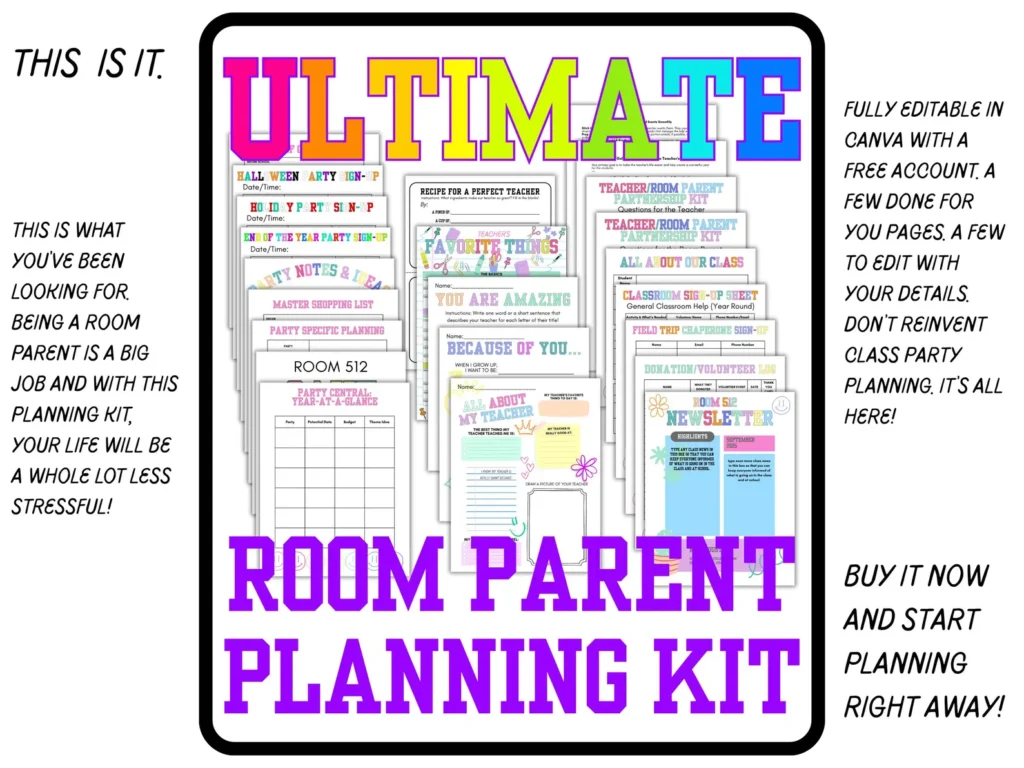
    Image of what is included in the ultimate room parent planning kit.

    FAQs

    Do I need to buy anything?
    No. Room parents coordinate—they don’t fund everything.

    How many parties should we plan?
    Most classes do 2–3 per year.

    What if no one volunteers?
    Start small and keep requests low-pressure. Many parents will help once they know what’s needed.

    Read more about recruiting volunteers so you’ve always got someone to call on for help. How to Recruit School Volunteers Without Begging or Guilt-Tripping


    Being a room parent is one of the most meaningful (and manageable!) ways to support a classroom. With a clear first email and a simple plan, you’ll feel confident all year long.
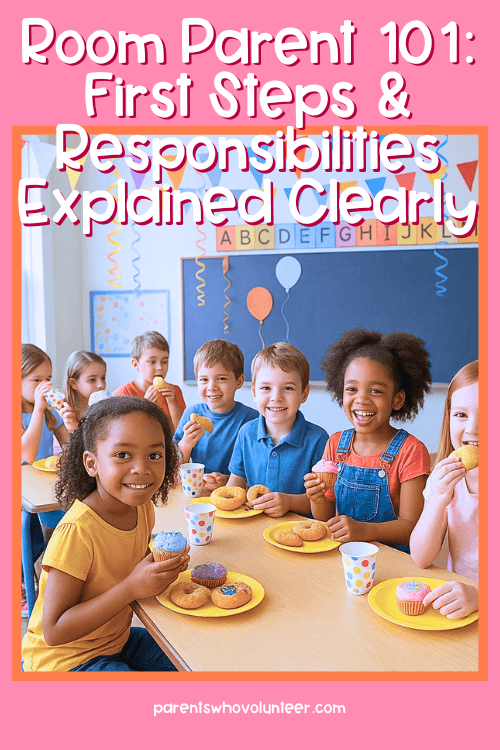
    A group of elementary school children sit at classroom tables enjoying a party hosted by a room parent with cupcakes, donuts, and colorful decorations. Bright banners and balloons hang above a chalkboard, and the kids smile and eat treats in a cheerful, festive setting.
  • Class Party Guide: Easy Themes, Timelines, and Parent Communication

    Class parties should be fun—not overwhelming. After years of helping teachers and room parents coordinate celebrations, I’ve learned this:

    The best classroom parties are simple, structured, and minimal-impact for teachers.

    Here are easy class party ideas that work in any grade and require very little prep.


    The Secret to a Great Class Party

    Three things matter most:

    1. Short activities

    Kids lose attention fast. Keep things moving.

    2. Minimal mess

    Teachers appreciate activities that don’t require 20 minutes of cleanup.

    3. Clear structure

    Break the party into 3–4 stations or activities.


    Simple Class Party Ideas (Kid-Approved + Low-Stress)

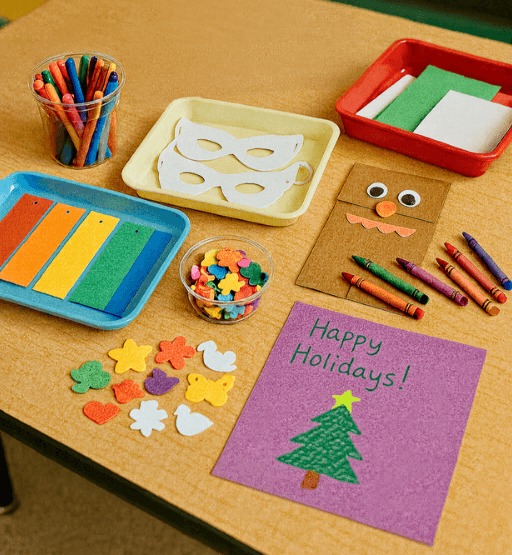
    1. Craft Stations (with pre-cut supplies)

    • Bookmark decorating
    • Simple foam sticker crafts
    • Color-your-own masks
    • Paper bag puppets
    • Holiday card-making

    Pro tip: Pre-cut everything.

    A class party craft table filled with pre-cut supplies, including colorful paper bookmarks, foam sticker shapes, white paper masks, a paper bag puppet, crayons, holiday card materials, and small trays of craft pieces, arranged neatly on a light wooden surface with a chair and tan brick wall in the background.

    2. Game Stations

    • Cup stacking (Amazon)
    • Ring toss
    • Bingo
    • Minute-to-win-it challenges
    • Beanbag toss

    Games keep energy positive and structured.


    3. Snack Stations

    Make them simple:

    • Fruit kabobs
    • Popcorn cups
    • Graham crackers + frosting + sprinkles
    • Trail mix bar (nut-free options!)

    Use small portions to reduce mess.


    4. STEM or Quiet Stations

    Great for mixed-energy classes:

    • Building with toothpicks + marshmallows
    • LEGO challenge cards
    • Simple origami
    • Puzzle table

    5. Reading or Coloring Corner

    Helpful when kids need downtime.

    • Themed coloring sheets
    • Seasonal storybooks
    • Cozy blankets or pillows from home
    • I’ve never seen a comfy corner without one of these: (Amazon)

    Sample 4-Station Party Layout

    • Station 1: Craft
    • Station 2: Game
    • Station 3: Snack
    • Station 4: Quiet/STEM

    Rotate every 10–12 minutes.


    Simple Christmas Classroom Party Activities Kids Always Love

    If you’re planning a simple Christmas class party and need activities that are easy to prep, low-mess, and fun for every grade level, these ideas work beautifully—even if you only have a few parent volunteers. Each one uses inexpensive supplies and keeps kids engaged without overwhelming you or your classroom.

    Ornament Decorating

    A quick, low-prep craft that doubles as a keepsake. Set out wooden or plastic ornaments, markers, ribbon, and a few sticker sheets. Kids love taking these home to hang on their tree.

    Holiday Card-Making

    Perfect for early finishers and something kids of all ages can do independently. Provide pre-cut shapes, glue sticks, crayons, and holiday stamps so students can create cards for family, teachers, or a local nursing home.

    Gingerbread Houses (No-Bake)

    Use graham crackers, frosting “glue,” and candy pieces to build mini gingerbread houses. This Christmas classic feels magical for kids while staying simple for adults with the right prep.

    Christmas Bingo

    A classroom favorite that works well for mixed ages. Print a few different bingo cards, grab some small prizes, and kids can play in rounds while volunteers help call out the squares.

    Reindeer Ring Toss

    A fun movement-based game that burns off some class party energy. Use an antler headband or a simple cardboard cutout and let kids toss rings to score points.

    Snowball Toss

    Quick to set up and perfect for indoor play. Students toss cotton “snowballs” into buckets or hoops at varying distances to earn points.

    Cozy Holiday Read-Aloud

    If your class party needs a quiet, calm moment, a festive read-aloud corner with pillows, blankets, and Christmas books resets the group and gives everyone a little breather.

    Santa’s Workshop Craft Stations

    Rotate students through three simple craft tables—foam stickers, bookmarks, ornaments, or mask decorating. Keeping everything pre-cut ensures quick flow and zero chaos.

    Sugar cookies, small tubs of frosting, and sprinkles turn into an instant crowd-pleaser. Keep baby wipes or damp cloths handy for easy cleanup.

    North Pole Photo Booth

    Set up a quick backdrop with wrapping paper and holiday props like Santa hats or signs. This makes a cute memory without needing a professional setup.

    Christmas Scavenger Hunt

    Hide small holiday items around the classroom—bells, stockings, mini trees—and give kids a printed checklist to complete. Works great as a group or individual challenge.


    Common Mistakes to Avoid

    • Too many sugary treats
    • Activities that take too long
    • Craft supplies that require glue (avoid if possible)
    • No structure—kids need clear transitions

    Classroom parties don’t need over-the-top themes or complicated crafts. Simple, structured stations make kids happy and keep teachers stress-free.

    Get your Ultimate Room Parent Planning Kit below!

    Related Post: Room Parent 101: First Steps & Responsibilities Explained Clearly

  • Teacher Favorites Forms: Why They Matter & How to Use Them

    If you’ve ever stood in a Target aisle trying to guess whether your child’s teacher prefers chocolate or coffee, you already know the magic of a Teacher Favorites Form. These quick, one-page questionnaires help families, room parents, and PTA leaders learn what teachers actually like—so appreciation gifts are thoughtful, personalized, and genuinely useful.

    Whether you’re organizing Teacher Appreciation Week, planning a class gift, or simply want to make a staff member feel seen on a tough day, a Teacher Favorites Form becomes one of the most helpful tools you can have.


    What Is a Teacher Favorites Form?

    A Teacher Favorites Form is a simple sheet—digital or printed—where teachers share their preferences, including:

    • Favorite snacks and drinks
    • Classroom supplies they use most
    • Hobbies and interests
    • Favorite restaurants and stores
    • Allergies or dietary preferences
    • Classroom wishlist items
    • Special notes or “things I always need”

    It’s basically a cheat sheet that makes appreciation effortless.


    Why Teacher Favorites Forms Matter

    1. They Make Gift-Giving Easier for Families

    Parents love giving thoughtful gifts—but they don’t always know what teachers will actually use or enjoy. A favorites list removes all the guesswork and helps avoid generic gifts that may go unused.

    2. They Prevent Allergies or Awkward Mistakes

    No more sending peanut butter snacks to a teacher with allergies or gifting a Starbucks card to someone who doesn’t drink caffeine. Favorites forms help everyone give safely and respectfully.

    3. They Make Teacher Appreciation Week Run Smoothly

    When your PTA or parent group plans a full Appreciation Week, having staff favorites on hand makes it easy to:

    • Assign daily treats
    • Coordinate class gifts
    • Handle staff surprises
    • Keep everything personal and consistent

    4. They Strengthen Teacher–Family Connections

    Small gestures—like bringing a teacher’s favorite drink on a hard day—go a long way. A favorites form opens the door to more meaningful appreciation throughout the year, not just in May.

    5. They Support New Teachers and Specialists

    Specialists (PE, music, speech, counselors, aides) often get overlooked simply because families don’t know them well. Favorites forms ensure every staff member feels seen and valued.


    How to Use Teacher Favorites Forms

    1. Collect Forms at the Beginning of the School Year

    The earlier you gather them, the more useful they’ll be. Many schools include them in the back-to-school packet, staff welcome survey, or new-teacher onboarding.

    You can distribute them:

    • Via Google Forms
    • Printed copies in staff mailboxes
    • Through your PTA newsletter
    • As part of room parent introductions

    2. Store Them Somewhere Easy to Access

    Parents will actually use the forms—if they can find them. Some smart places to share them:

    • A PTA website page
    • A shared Google Drive folder
    • A binder in the front office
    • A QR code posted near the staff lounge
    • Room parent group chats or email lists

    Make sure specialist teachers are included, too!

    3. Use Them for Holidays, Birthdays & Appreciation Week

    Favorites forms are your go-to tool for:

    • Teacher Appreciation Week themes
    • Holiday gifts
    • Staff birthdays
    • “Just because” treats
    • First-day-of-school surprises
    • End-of-year class gifts

    Instead of guessing, families can bring exactly what a teacher loves.

    4. Refresh Them Mid-Year (Optional)

    Teachers’ preferences change—especially when it comes to classroom needs. A quick mid-year update helps keep things accurate and useful.

    5. Make It Easy for Teachers

    Most teachers appreciate the form, but they’re busy. Keep it:

    • Short
    • Simple
    • Optional in parts
    • Easy to complete digitally

    If you’re a room parent pressed for time and just want a ready made teacher favorites form, I’ve got you covered here! (Etsy)


    What to Include in Your Teacher Favorites Form

    If you’re creating your own, here are the categories that work best:

    • Favorite drinks
    • Favorite snacks
    • Favorite candies
    • Preferred restaurants
    • Favorite stores (local + national)
    • Classroom supply needs
    • Favorite scents or self-care items
    • Hobbies & interests
    • Allergies or food restrictions
    • Classroom wishlist
    • A “things I always need” section

    These categories give parents lots of options and encourage useful, clutter-free gifting.


    Make It Easy With a Template

    If you want a polished, ready-to-use version, you can use a Teacher Favorites Form Template to collect responses quickly. A template makes it easy to:

    • Print and distribute
    • Send digitally
    • Keep responses organized
    • Share with room parents

    Final Thoughts

    Teacher Favorites Forms may seem small, but they make an enormous difference. They help families give with confidence, help PTAs plan meaningful appreciation events, and—most importantly—help teachers feel truly valued.

    A little thoughtfulness goes a long way, and these simple forms make it easy for everyone to show appreciation in a way that feels personal and heartfelt.


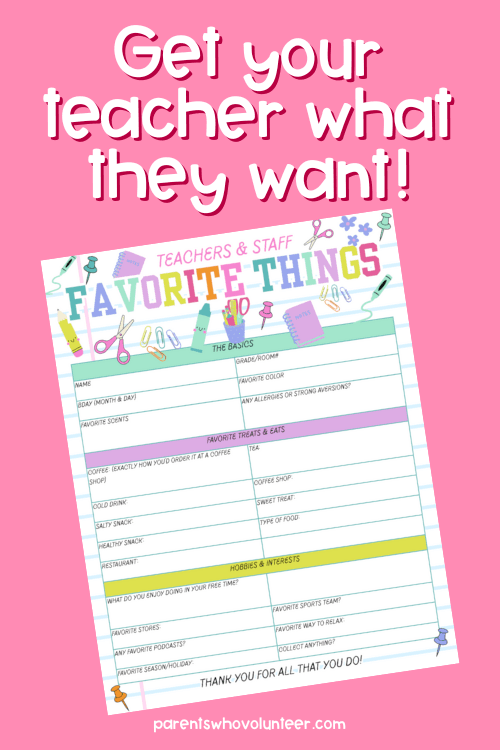
    Pin image for a teacher favorites things form.

    You might also like:
    Class Party Guide: Easy Themes, Timelines, and Parent Communication

    5 Quick Ways to Support New Teachers Without Overstepping

    Room Parent 101: First Steps & Responsibilities Explained Clearly

    How to Organize Classroom Volunteers Without Chaos

  • 5 Quick Ways to Support New Teachers Without Overstepping

    Starting a new teaching job can feel overwhelming. New teachers juggle classroom management, curriculum planning, parent communication, and school procedures—all while trying to build relationships with students and staff. Families and PTA leaders can make a huge positive impact, but it’s important to offer help in ways that feel respectful, welcome, and aligned with what the teacher actually needs.

    Here are five quick, meaningful ways to support new teachers without overstepping boundaries or adding more to their plate.


    1. Ask What They Need—Then Actually Follow Their Lead

    The simplest (and most appreciated) gesture is also the most respectful: ask first. New teachers often know exactly what would help them most, whether that’s extra glue sticks, a read-aloud volunteer, or someone to prep copies for an event.

    A simple script works well:
    “I’d love to support you this year. Is there anything small I can help with?”

    This approach avoids guessing, avoids overwhelming them, and ensures your help is welcome—not intrusive.

    Grab my Teacher Favorites Form from Etsy here.


    2. Respect Their Classroom Systems

    Every teacher has their own routines—especially new ones who are building consistency. Support them by respecting:

    • How they handle behavior
    • How they communicate with families
    • How they manage snacks, birthdays, and supplies
    • Their homework or reading expectations

    Even if their approach is different from previous teachers, consistency helps their confidence grow. When parents reinforce those systems at home, it makes the class run smoother for everyone.


    3. Offer One-Time, Low-Lift Help

    New teachers are often hesitant to ask for help because they don’t want to burden anyone. Offering specific, simple, one-time tasks is a great way to support them without creating long-term commitments.

    A few easy examples:

    • Sharpening pencils
    • Cutting out laminated pieces
    • Taking home a stack of papers to staple
    • Sending in extra tissues or wipes
    • Providing a snack for a class party

    These tiny tasks make a surprisingly big difference—and they don’t require coordination or follow-up.


    4. Share Resources Without Overloading Them

    It’s tempting to share every Pinterest idea, printable, or tip you come across, but too many suggestions can feel overwhelming to a new teacher who’s already navigating so much.

    Instead, offer help thoughtfully:

    • Ask if they’d like ideas before sending them
    • Keep suggestions relevant and minimal
    • Focus on tools that save them time, not add work
    • Follow the school’s curriculum and guidelines when suggesting resources

    A supportive tone sounds like:
    “I found something that reminded me of your project—would you like me to send it?”

    This gives them an easy, pressure-free option to decline.


    5. Protect Their Time and Space

    New teachers are learning how to manage their time, grade efficiently, and set boundaries. One of the most powerful ways families can support them is by respecting those boundaries.

    That includes:

    • Keeping emails concise
    • Avoiding drop-in classroom visits unless invited
    • Using the teacher’s preferred communication method
    • Limiting requests during the busy start and end of the day
    • Understanding that responses may take 24–48 hours

    Supporting boundaries shows respect and helps new teachers avoid burnout early in their careers.


    The Heart of It: Encourage Them

    A kind word goes further than you think. A quick email, sticky note, or message from your child saying, “You’re doing a great job,” can be incredibly motivating—especially on tough weeks when new teachers feel unsure or overwhelmed.

    You don’t need big gestures. You don’t need to be in the classroom every day. Small acts of support, offered respectfully, build trust and help new teachers thrive.

    You’ll probably also like:
    Room Parent 101: First Steps & Responsibilities Explained Clearly
    Class Party Guide: Easy Themes, Timelines, and Parent Communication
    Teacher Favorites Forms: Why They Matter & How to Use Them

    How to Organize Classroom Volunteers Without Chaos

    Pinterest graphic for 5 quick ways to support new teachers.
  • How to Organize Classroom Volunteers Without Chaos

    Classroom volunteers can be an incredible help—boosting student support, freeing up teacher time, and strengthening school community. But without a system, managing volunteers can quickly become overwhelming. Missed sign-ups, unclear directions, and too many helpers at once can create more stress than support.

    The good news: with a few simple structures, you can organize classroom volunteers smoothly and make the experience enjoyable for everyone involved. Here’s how to build a volunteer system that actually works—without chaos, confusion, or constant micromanagement.


    1. Start With Clear Volunteer Roles

    One of the biggest sources of chaos is vague expectations. Volunteers need to know exactly what they’re signing up for so they feel confident and prepared.

    Create a short list of recurring roles such as:

    • Small-group support
    • Classroom prep (copying, cutting, stapling)
    • Library helper
    • Tech assistant
    • Event volunteer
    • Room parent coordinator

    A simple description for each role helps parents select what fits their strengths and schedule.

    Tip: Include time estimates so families know if a job takes 10 minutes or an hour.

    You might also like: Class Party Guide: Easy Themes, Timelines, and Parent Communication


    2. Use One Central Sign-Up System

    Scattered emails and handwritten sign-ups create confusion fast. Choose one place all volunteer opportunities live.

    The most popular tools include:

    • Google Sheets
    • SignUpGenius
    • Google Calendar slots
    • PTA website forms
    • ClassDojo or Remind links

    Whichever you choose, make sure:

    • The link is easy to access
    • Volunteers can edit their sign-up
    • You can update it quickly
    • It’s mobile-friendly

    Consistency is key—if parents always know where to look, you avoid 90% of the confusion.


    3. Create a Weekly or Monthly Volunteer Schedule

    A predictable rhythm makes volunteer management so much easier for teachers. Instead of having volunteers randomly show up on days that seem convenient, create a schedule such as:

    • Mondays: Prep + copying
    • Wednesdays: Small groups
    • Fridays: Library + organization

    Or, create 30-minute volunteer blocks throughout the week.

    This avoids overcrowded days and prevents teachers from scrambling to find tasks when unplanned help arrives.


    4. Communicate Expectations Before Volunteers Arrive

    New volunteers want to help—they just don’t want to guess what’s okay or not. Share a short expectations list ahead of time, such as:

    • Please arrive on time
    • Cell phones away during student time
    • Confidentiality is important
    • Ask before giving academic help
    • No photos unless approved
    • Follow teacher instructions

    A one-page “Volunteer Guidelines” sheet sets boundaries kindly and avoids awkward conversations later.


    5. Prep Materials Ahead of Time

    A little organization goes a long way. When teachers or room parents prepare materials in advance, volunteers know exactly what to do.

    Helpful ideas:

    • A “To Be Done” bin with instructions
    • Pre-cut tasks in zip-top bags
    • A dedicated drawer for laminating, cutting, or assembling
    • Color-coded instructions for multi-step tasks
    • Sticky notes with quick reminders

    The more ready the tasks are, the smoother the volunteer experience will be.


    6. Match Volunteer Jobs to Skill Levels

    Not every parent loves the same tasks—and that’s okay! Some prefer behind-the-scenes jobs, others love reading with kids.

    Offer options like:

    Low-comfort (easy):

    • Sharpen pencils
    • Copier jobs
    • Sorting papers

    Medium-comfort:

    • Reading with one student
    • Running math flash card stations
    • Helping organize classroom library

    High-comfort:

    • Small-group instruction
    • Classroom management support
    • Tech or project support

    Matching skills and comfort levels reduces stress for both volunteers and teachers.


    7. Keep Communication Consistent and Simple

    Overcommunication can be just as confusing as no communication. Use one reliable method, such as:

    • A weekly email
    • A ClassDojo/Remind message
    • A monthly volunteer overview
    • A QR code posted outside the classroom

    The trick is consistency—parents are more reliable when they always know where updates will appear.


    8. Show Appreciation (It Matters!)

    Volunteers don’t expect much, but they do appreciate being acknowledged. Simple gestures go a long way:

    • A thank-you note
    • A volunteer shout-out board
    • A small treat at conference time
    • A group thank-you email
    • A photo of finished work with “Thanks for helping!”

    Grateful volunteers return—and they tell others.


    Final Thoughts

    Organizing classroom volunteers doesn’t have to be chaotic. With clear roles, simple systems, predictable schedules, and thoughtful communication, you can build a volunteer program that truly supports teachers while keeping everything running smoothly.

    Whether you’re a room parent, PTA leader, or teacher, these strategies help create a classroom environment where volunteers feel confident and teachers feel supported.

    More room parent related posts below:
    Room Parent 101: First Steps & Responsibilities Explained Clearly
    Class Party Guide: Easy Themes, Timelines, and Parent Communication