Category: Fundraising Ideas & How-To Guides

Simple, realistic fundraisers with timelines, scripts, and templates.

  • 10 Low-Stress School Carnival Games (That Volunteers Love)

    10 Low-Stress School Carnival Games (That Volunteers Love)

    If you’ve ever planned a school event, you know the biggest resource isn’t money—it’s manpower. The success of any school carnival often rests on the shoulders of your dedicated volunteers, but long lines, messy cleanup, and overly complicated activities lead directly to burnout. We’ve compiled the ultimate list of 10 low-stress carnival games designed specifically to keep lines moving fast and volunteer effort low. These are the games that require minimal setup, maximum fun, and ensure your volunteers are happy, rested, and ready to sign up again next year!

    If you haven’t yet read my post on How to Plan a School Carnival, check that out first.

    1. The Lollipop Tree

    • The Concept: A wooden “tree” or pegboard filled with lollipops. The tips of the sticks are color-coded (buried inside the board).
    • How it Works: The child picks one lollipop. If the tip is colored red, they get a big prize. If not, they keep the lollipop.
    • Why it Saves Sanity: It is a “winner every time” game that takes 5 seconds per turn. No loose tickets to count, no restocking until the board is empty.
    • Amazon Shopping List for The Lollipop Tree:

    2. The 2-Liter Ring Toss

    • The Concept: A group of 2-liter soda bottles grouped together on the ground.
    • How it Works: Kids toss a plastic ring. If it lands around the neck of a bottle, they win the soda.
    • Why it Saves Sanity: The game is the prize storage. When a kid wins, they take the bottle, clearing space. There is zero “restocking” required during the rush.
    • Amazon Shopping List for The 2-Liter Ring Toss

    3. Pool Noodle Javelin

    • The Concept: Hang a Hula Hoop from a tree branch or basketball rim.
    • How it Works: Kids throw a foam pool noodle through the hoop.
    • Why it Saves Sanity: Pool noodles are soft (nobody gets hurt), impossible to break, and easy for kids to retrieve themselves. Volunteers don’t have to fetch the “ammo.”
    • Amazon Shopping List for Pool Noodle Javelin:

    4. Plinko (The Disc Drop)

    • The Concept: A vertical board with pegs. Kids drop a puck at the top, and it bounces down into a slot at the bottom.
    • How it Works: Slots are labeled with different prize levels.
    • Why it Saves Sanity: Gravity does all the work. There are no moving parts to break, and even a seated volunteer can run this booth easily.
    • Amazon Shopping List for Plinko
      • Plinko Board & Discs – This one is a little pricy, but it is super durable and something that you can use year after year for many events. One event we used it for that wasn’t a school carnival was for Back to School Night. It was a way to draw kids and their parents to the PTA booth to learn more about what we do.

    5. Toilet Paper Toss

    • The Concept: Hang a clean (new) toilet seat from a frame or goal post.
    • How it Works: Kids try to throw a roll of toilet paper through the seat.
    • Why it Saves Sanity: It’s visually funny, which draws a crowd, but the supplies are cheap, soft, and dry. Unlike water balloons, there is no cleanup.
    • Amazon Shopping List for Toilet Paper Toss

    6. Magnetic Fishing

    • The Concept: Plastic fish with magnets on their noses in a small kiddie pool (can be dry or wet).
    • How it Works: Kids use a rod with a magnet to “catch” a fish. The color on the bottom of the fish denotes the prize.
    • Why it Saves Sanity: Unlike traditional carnival fishing (where a volunteer hides behind a curtain and clips prizes on), this requires only one volunteer to hand out the prize.
    • Amazon Shopping List for Magnetic Fishing Game

    7. Hole-in-One Putting

    • The Concept: A simple strip of green turf leading to a single cup.
    • How it Works: Putt the ball in the cup to win.
    • Why it Saves Sanity: It is self-contained. The child putts, the child retrieves the ball. The volunteer simply hands out the prize if they sink it.
    • Amazon Shopping List for Hole in One Putting
      • Golf Putting Green – I really like this one because it has 3 holes instead of one which means more of a chance the child will get a hole in one.

    8. The “Lucky Key” Chest

    • The Concept: A glass jar filled with 50 keys. A locked treasure chest sits next to it.
    • How it Works: The child picks one key and tries to open the lock. If it opens, they win the “Grand Prize” inside (or a token for a prize).
    • Why it Saves Sanity: The suspense is high, but the labor is low. You only need to verify if the lock opened.
    • Amazon Shopping List for The Lucky Key Chest
      • Bulk Keys – This set of random bulk keys is great because they’re all shapes and sizes.

    9. Spin the Wheel

    • The Concept: A classic carnival wheel with numbers or colors.
    • How it Works: Spin and win.
    • Why it Saves Sanity: It eliminates arguments about skill. It is pure chance. It’s fast, loud, and visually exciting without requiring the volunteer to explain rules or reset targets.
    • Amazon Shopping List for Spin the Wheel

    10. “Guess the Number” Station (Passive Game)

    • The Concept: A large clear jar filled with jellybeans, LEGOs, or erasers.
    • How it Works: Kids write their guess and their name on a slip of paper. The closest guess wins the jar at the end of the night.
    • Why it Saves Sanity: This requires zero active supervision. You just need a table, the jar, slips of paper, and a drop box.

    Implementing these 10 low-stress carnival games is the easiest way to protect your PTO’s most valuable asset: its volunteers. By choosing high-throughput, low-maintenance activities, you transform your fundraiser from a marathon of exhaustion into a fun, manageable event. Say goodbye to complicated setups and all-day shifts. Focus on celebrating the school community, raising funds, and keeping your volunteer roster healthy. Start building your stress-free carnival plan today!

    You might also like:
    How to Run a Successful Fun Run (Even If You’ve Never Done One Before)
    Easy School Fundraisers to Run With Only a Few Volunteers

  • How to Plan a School Carnival Without Burning Out Your Volunteers: The Ultimate Stress-Free Guide

    How to Plan a School Carnival Without Burning Out Your Volunteers: The Ultimate Stress-Free Guide

    We’ve all seen it happen. The school carnival is a massive financial success, raising thousands of dollars for new playground equipment or technology. But the next day, the PTA board is exhausted, parents are grumpy, and the volunteer coordinator is vowing to “never do this again.”

    A successful fundraiser shouldn’t cost you your sanity.

    Planning a school carnival is a balancing act between maximizing fun and preserving your human resources. If you want to know how to plan a school carnival that keeps morale high and stress low, you have to build “burnout prevention” into the plan from day one.

    Here is your step-by-step guide to hosting an amazing event while keeping your volunteers happy, rested, and ready to come back next year.


    1. Start with the “Rule of Minimum Viable Fun”

    The biggest cause of volunteer burnout is scope creep—trying to do too much with too few people.

    Before you book a single dunk tank, gather your core committee and agree on the scope. Ask yourselves: Does this add enough value to justify the labor?

    • Skip the homemade food: Cooking requires health permits, massive prep time, and constant staffing. Instead, invite food trucks to the school carnival. They handle the labor and the permits; you just take a percentage of sales (usually 10-15%).
    • Simplify the prizes: Avoid “ticket counting” stations that require huge staffing. Use a stamp card system or simply let kids play for the fun of it, giving every child a treat bag at the exit.

    Pro Tip: If school carnival activity requires more than two people to run it at a time, cut it. Your goal is high-fun, low-labor.


    2. Master the Art of the “Micro-Shift” During the School Carnival

    Nothing scares away a potential volunteer faster than a four-hour commitment on a Saturday at the school carnival. To fill your roster, you need to lower the barrier to entry.

    Change your sign-up strategy to prioritize Micro-Shifts:

    • The 45-Minute Rule: Cap shifts at 45 minutes to an hour. Parents are more likely to say yes if they know they can still watch their own kids play for the majority of the event.
    • The “Floater” Squad: Recruit a specific team of 4-5 volunteers whose only job is to relieve people for bathroom breaks or cover no-shows.
    • The “Set-Up/Tear-Down” Split: Never ask the same people to set up and tear down. Create two distinct teams so no one is there from dawn till dusk.

    3. Leverage “Outsider” Labor

    Why rely solely on exhausted parents? Look outside the immediate PTA circle to staff your school carnival booths.

    • High School Honor Societies: National Honor Society (NHS) and Key Club members often need service hours. They are energetic, capable, and great with kids.
    • Local Community Groups: Scout troops, local martial arts dojos, or dance studios may run a booth in exchange for allowing them to put up a banner advertising their local business.
    • Alumni: Reach out to parents of students who graduated last year. They often miss the community but don’t miss the pressure.

    4. Automate the Chaos

    If you are using a clipboard and a spreadsheet, you are working too hard. Use digital tools to manage the mental load.

    • Volunteer Management: Use platforms like SignUpGenius or Volunteerspot. These tools send automated reminders so you don’t have to chase people down the morning of the scool carnival.
    • Ticket Sales: Pre-sell wristbands online using your school’s payment portal or tools like Zeffy. This reduces the need for volunteers handling cash at the gate, which is a high-stress role.

    5. Design “Low-Labor” Booths

    Choose games that are self-resetting or incredibly simple to manage.

    High-Labor Games (Avoid)Low-Labor Games (Embrace)
    Face Painting: Requires skill, takes 5+ minutes per kid, creates long lines.Temporary Tattoo Station: Kids apply them with a wet sponge themselves. Fast and easy. (Amazon)
    Goldfish Toss: Dealing with live animals and water changes is a nightmare.Lollipop Tree: Pick a lollipop; if the stick is colored, you win a prize. Done in 5 seconds. (Amazon)
    Cake Walk: Requires soliciting 50+ cakes and constant music management.Soda Ring Toss: Throw a ring on a 2-liter bottle. The prize is the bottle. No restocking needed.

    6. Create a School Carnival Volunteer “VIP Experience”

    To prevent burnout, you must make your volunteers feel valued, not used. Treat your volunteers like VIPs.

    • The Volunteer Lounge: Set up a quiet classroom with air conditioning, cold water, coffee, and decent snacks (not just leftover pizza). Give them a place to escape the noise for 10 minutes.
    • Identify Them: Give volunteers a special t-shirt or a bright lanyard. It makes them feel official and helps guests know who to ask for help.
    • The “Fast Pass”: Give volunteers two “Fast Passes” for their own children to skip the line at the most popular attraction. This alleviates the guilt of working while their kids are waiting in line.

    7. The Post-Event “Cool Down”

    Burnout often hits the day after the carnival.

    • No Meetings for a Month: Cancel the next PTA meeting. Give everyone a break.
    • Public Praise: Thank volunteers by name in the school newsletter or on social media.
    • Feedback Loop: Send a generic, anonymous survey asking, “What was the hardest part of volunteering?” Use this data to fix pain points for next year immediately, showing them you are listening.

    Final Thoughts

    Planning a school carnival doesn’t have to be a sentence to months of exhaustion. By simplifying your scope, automating your systems, and treating your volunteers like the precious resource they are, you can create a tradition that families—and volunteers—look forward to every year.

    You might also like:
    Popsicles on the Playground (Easy Back-to-School or End-of-Year Event)
    Muffins with Mom (Simple Morning Event Guide)
    Everything You Need to Host a Family Dance (Glow, Disco, Neon, etc.)
    How to Run a School Movie Night (Easy, Family-Friendly Event Guide for PTA/PTO Volunteers)
    School Spirit Week Guide: Easy Planning Tips for PTA and PTO Leaders

  • How to Run a Successful Fun Run (Even If You’ve Never Done One Before)
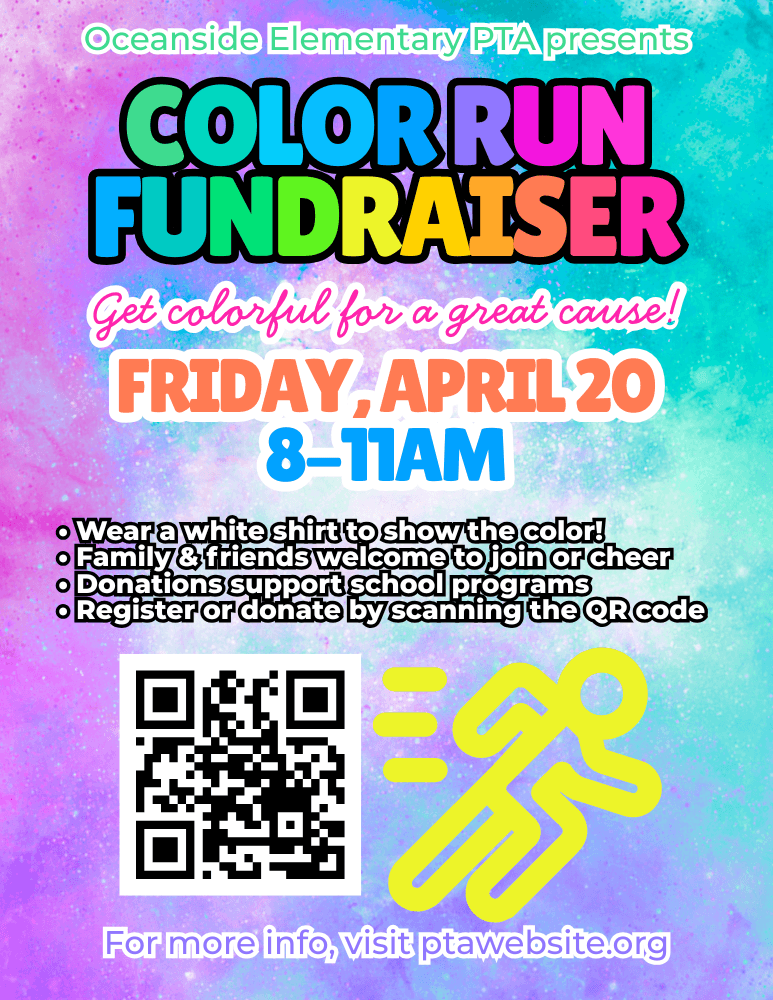
    A jog-a-thon (or fun run) is one of the most effective school fundraisers — especially when you keep the timeline simple. I’ve planned a dozen of these events with teams of all sizes, and the secret to success is always the same:

    Start early, communicate clearly, and follow a predictable weekly rhythm.

    Here’s a realistic, week-by-week fun run timeline you can copy for your school.


    Before You Begin: What Makes a Fun Run Successful?

    Three things matter more than anything else:

    1. Clear communication

    Families participate more when they know exactly what’s happening and when.

    2. Volunteer roles that make sense

    You don’t need an army — just well-defined tasks.

    3. A simple, repeatable structure

    Your timeline should feel manageable, not overwhelming.


    You might also like: How to Run a School Movie Night (Easy, Family-Friendly Event Guide for PTA/PTO Volunteers)

    6-Week Fun Run Timeline


    6 Weeks Before — Planning & Set-Up

    • Choose your date and backup weather plan.
    • Select your fundraising platform or pledge system.
    • Meet with your principal to confirm details.
    • Define your volunteer roles (registration, sponsorships, event day help).
    • Create your theme (optional but fun!).
    • Draft your first announcement.

    5 Weeks Before — Sponsorships & Communication

    • Send sponsorship letters to local businesses.
    • Finalize your budget and goal.
    • Confirm T-shirt or prize vendor timelines (if applicable).
    • Announce the event to families (flyer + email + social media).
    • Create teacher packets with key dates.

    4 Weeks Before — Kickoff Prep

    • Plan your student kickoff assembly or class visits.
    • Gather materials: pledge sheets, classroom posters, markers, tracking sheets.
    • Recruit event-day volunteers (lap counters, water station, setup).
    • Set up your fun run webpage or online donation link.

    Be sure to read my post on recruiting volunteers without having to beg so you have a deep pool of volunteers to delegate tasks to!


    3 Weeks Before — Launch Week

    • Kick off the event with announcements and excitement.
    • Send home pledge forms or digital donation links.
    • Add posters and trackers in classrooms.
    • Remind teachers of their role in daily updates.
    • Start collecting early pledges.

    2 Weeks Before — Momentum Building

    • Spotlight class leaders or grade-level challenges.
    • Post daily updates on progress.
    • Share sponsor shoutouts.
    • Confirm all event-day supplies (cones, water, stickers, music, extension cords).
    • Recruit any remaining volunteers.

    If you need any other event ideas: Easy School Fundraisers to Run With Only a Few Volunteers


    1 Week Before — Final Prep

    • Confirm your schedule by class/grade.
    • Pack your event kit (markers, lap counter sheets, zip ties, snacks).
    • Test your sound system.
    • Send “What to Wear” reminders (running shoes, water bottles, sunscreen).
    • Organize prize distribution, if applicable.

    Event Day

    • Arrive early to set up cones, signs, sound system, and water station.
    • Review roles with volunteers.
    • Keep the run upbeat with music and shoutouts.
    • Mark laps clearly and consistently.
    • Take photos for thank-you posts.

    After the Event

    • Collect final pledges.
    • Announce results within 48 hours.
    • Thank volunteers, families, teachers, and sponsors.
    • Debrief with your team and save all notes for next year.

    A fun run becomes smooth and successful when you follow a simple timeline like this. With clear communication and a few key volunteers, this can become one of your school’s strongest fundraisers.

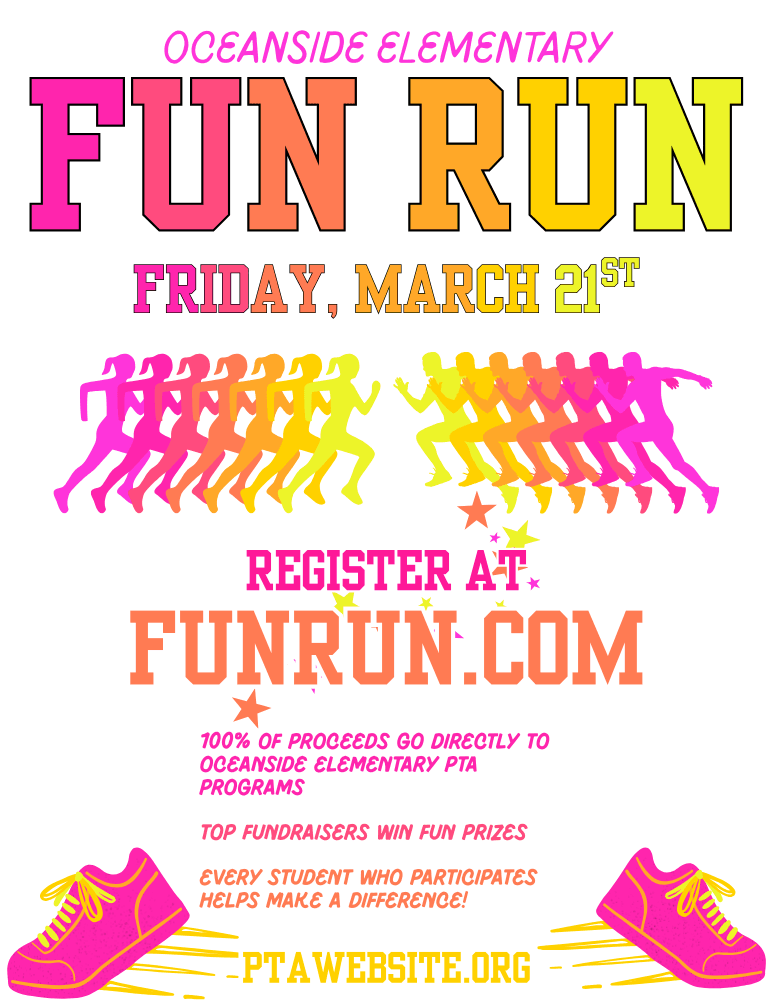
    Canva Flyer Templates for Fun Runs

  • Easy School Fundraisers to Run With Only a Few Volunteers

    If your parent group is short on volunteers—or you’re rebuilding after a slow year—you don’t need a huge committee to raise money. The truth is:

    Some school fundraisers work incredibly well with only a handful of volunteers.

    You just need easy school fundraisers that are simple, predictable, and low-prep.
    Here are the easiest school fundraisers I’ve seen succeed at real schools (yes, even when only 2–4 people were involved).


    What Makes a Fundraiser “Easy”?

    From years of running these (often with tiny teams), the easiest fundraisers all have these things in common:

    ✔ Low volunteer hours

    Short shifts, simple tasks, and minimal setup.

    ✔ Clear purpose

    Parents donate more when they understand what the funds support.

    ✔ No expensive upfront costs

    Avoid fundraisers that require large inventory purchases.

    ✔ Predictable success

    Choose ideas with a strong track record—not trendy experiments.


    Easy School Fundraisers to Run This Year

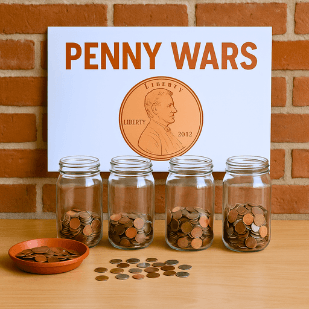
    1. Penny Wars

    One of the highest-earning low-effort fundraisers.

    Why it works:

    • Kids LOVE it
    • Teachers handle collection
    • Volunteers only count money. It might be worth getting a coin counter/sorter for this type of fundraiser if you plan on doing it year after year. (Amazon)
    • No purchasing or inventory

    Add bonus days (“Double Points Day!”) to boost excitement.

    Four glass jars for an easy school fundraiser partially filled with pennies sit on a wooden table in front of a brick wall, with a large “Penny Wars” sign above them and loose coins scattered on the surface beside a small dish of pennies.

    2. Restaurant Dine-Out Nights

    Very little work, consistent earnings. These are passive fundraisers that are easier than any other. Promoting it is the hardest part.

    How it works:

    • Partner with a local restaurant
    • Families dine in or order takeout
    • School receives 10–30% of sales

    Your job is just promotion.

    Restaurants That Will Give You a Percentage of Sales:

    • Panera
    • Papa John’s
    • Panda Express
    • Mountain Mike’s Pizza
    • California Pizza Kitchen
    • Chipotle
    • Chik-Fil-A
    • Texas Roadhouse
    • …and more!

    Contact locally owned small restaurants too! It’s a great way to connect with the community.


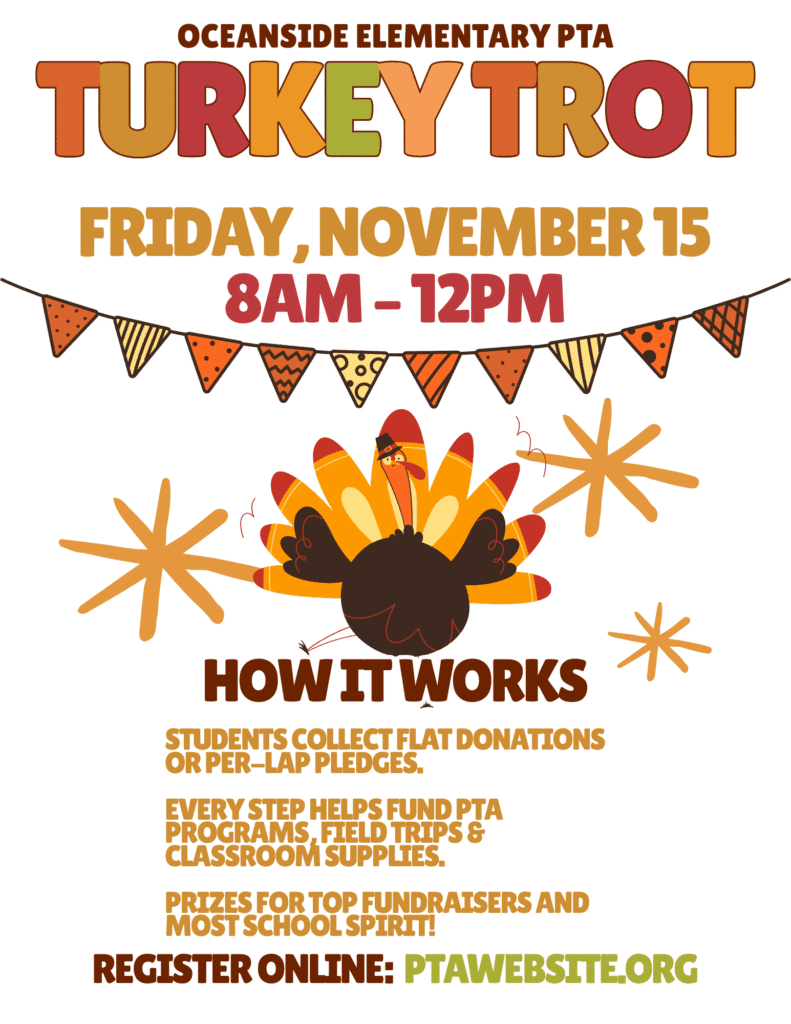
    3. Fun Run / Jog-A-Thon

    Shockingly easy when you follow a simple timeline.

    Why it works:

    • Clear purpose
    • Good community involvement
    • No product sales
    • Strong donation potential

    This fundraiser builds school spirit while raising money.

    You might also like: How to Run a Successful Fun Run (Even If You’ve Never Done One Before)

    4. Spirit Wear Sales

    A perfect low-touch fundraiser.

    Steps:

    • Upload designs
    • Partner with print-on-demand vendors (Printful is one I’ve worked with for years.)
    • Promote during back-to-school
    • Receive a portion of proceeds

    No inventory. No order sorting.


    5. Candy Grams or Holiday Grams

    Small items, big impact.

    Why it’s easy:

    • Students deliver
    • Low-cost supplies
    • Simple ordering process
    • High participation

    Holiday grams are especially popular before breaks.

    Follow this link to all of my Candy Gram fundraiser templates on Etsy.


    6. Silent Auction (Smaller Version)

    You don’t need a gala to run a silent auction.

    Easy version:

    • Collect donations from local businesses
    • Photograph items
    • Host online bidding
    • Distribute digital certificates or pickup packages

    Minimal setup—maximum return.


    7. Read-a-Thon

    A quiet, academic-friendly fundraiser.

    Benefits:

    • Kids read more
    • Families donate easily
    • Teachers support it
    • No prep or physical items

    Platforms automate most of the process.


    8. Bake Sale or Treat Table

    Works best when tied to an event.

    Why it’s easy:

    • Volunteers donate baked goods
    • You sell before/after school events
    • Simple cash or QR code donations

    You only need one or two people to run the table.


    How to Choose the Right Easy School Fundraiser

    Ask:

    • How many volunteers do we actually have?
    • When is our busy season?
    • What do families respond to?
    • What made money in past years?
    • Do we want sales, donations, or events?

    Pick no more than 2–3 major fundraisers per year to avoid burnout.


    Common Mistakes to Avoid

    • Taking on too many fundraisers
    • Chasing “new” ideas that require lots of prep
    • Forgetting to communicate the purpose of the fundraiser
    • Not celebrating the results
    • Relying on the same volunteers every time

    Here’s a post on Volunteer Recruitment that you’ll like if you’re not sure how to recruit more volunteers without sounding like you’re begging.


    These easy school fundraisers are simple, reliable, and doable even with a tiny team. Choose one or two, keep communication clear, and focus on fun—not perfection.

    Ready to plan something fun? How to Run a Successful Fun Run (Even If You’ve Never Done One Before)