Category: Events & Programs

Planning guides for movie nights, carnivals, book fairs, STEM nights, etc.

  • How to Run a School Movie Night (Easy, Family-Friendly Event Guide for PTA/PTO Volunteers)

    If your school wants a fun, low-cost family event that brings everyone together, a school movie night is one of the easiest wins. I’ve helped run these with teams as small as three people, and when you follow a simple plan, they’re stress-free and highly attended.

    This guide covers exactly what to do, what to avoid, and how to make sure your movie night feels organized—not chaotic.


    What You Need to Know Before You Start Your School Movie Night

    Before jumping in, here are the three things that matter most:

    1. Keep the event simple

    You don’t need elaborate decorations, themed crafts, or complicated ticketing. Families come for the experience, not a production.

    2. Choose a space that already works

    Gyms, MPRs, cafeterias, or outside on the blacktop are all great options. Pick whichever requires the least transformation.

    3. Think “comfort + visibility” over aesthetics

    Good sound, clear viewing, and enough space matter more than Pinterest-worthy decor.

    Check out: Class Party Guide: Easy Themes, Timelines, and Parent Communication


    Step-by-Step Timeline for a School Movie Night

    3–4 Weeks Out

    • Pick your movie (family-friendly + copyright-compliant).
    • Reserve your space with the school office.
    • Decide if the event will be free, suggested donation, or concession-based.
    • Create your flyer / digital announcement.
    • Gather your core volunteer team (2–4 people is enough).

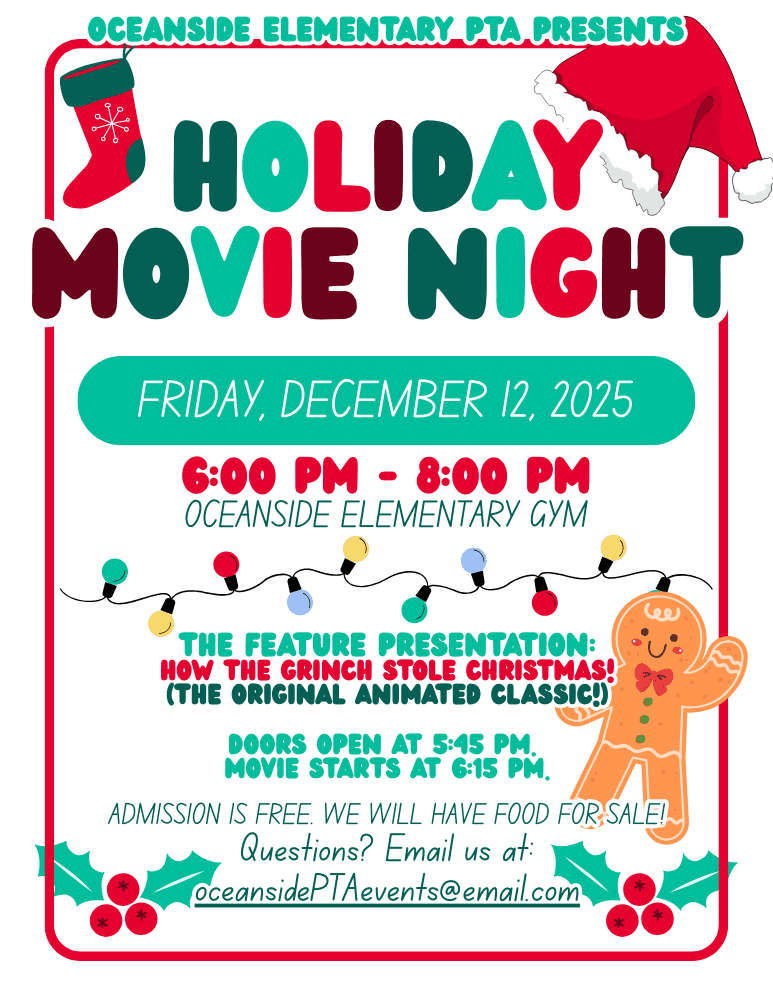
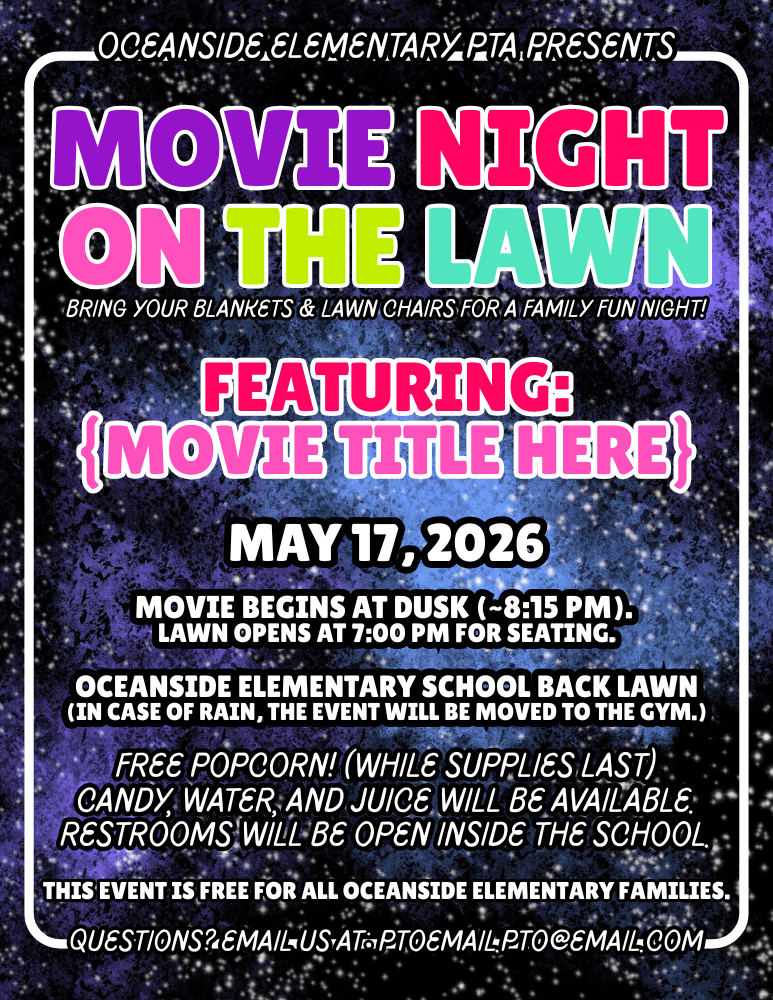
    polar express family movie night flyer example
    Sample of what a school movie night flyer should include. Find this exact flyer template and more in my Etsy shop.

    2 Weeks Out

    • Promote the event: newsletters, social media, teacher emails, and posters.
    • Create a simple layout: screen → seating → concessions → entry table.
    • Confirm equipment (projector, speakers, screen or blank wall).
    • Decide if families should bring blankets, chairs, or both.

    This would be the perfect event to recruit volunteers who don’t have a whole lot of time to donate but want to make a visible impact! Check out what I have to say about recruiting volunteers in this post.

    Also a fun event: Popsicles on the Playground (Easy Back-to-School or End-of-Year Event)


    1 Week Out

    • Buy concession supplies (popcorn, drinks, candy, glow sticks, etc.).
    • Prep your signage (entry, concessions, restroom signs, etc.).
    • Schedule volunteers for setup, concessions, and cleanup.
    • Send reminders to families.

    Day Of

    • Arrive 60–90 minutes early.
    • Test audio and video before anything else.
    • Set up entry table + donate jars if applicable.
    • Start concessions 30 minutes before the movie begins.
    • Welcome families and thank them for coming.
    • Lights off → Movie starts → Enjoy.

    You might also like: How to Run a Successful Fun Run (Even If You’ve Never Done One Before)


    Common Mistakes to Avoid

    • Forgetting the sound check (the #1 cause of panic).
    • Trying to decorate too much—keep it simple.
    • Setting up too few trash cans—you will need more.
    • Running concessions without prices visible—creates a line bottleneck.
    • Starting late—families appreciate timeliness.

    For your next event, go all out! Everything You Need to Host a Family Dance (Glow, Disco, Neon, etc.)


    FAQs

    Do we need a license to show the movie?
    Yes, most schools need a public performance license. Check with your district or use Swank/Movie Licensing USA.

    Can we do this outside?
    Absolutely—just test the projector brightness and have extension cords handy.

    What if we don’t have many volunteers?
    You truly only need 2–4 help­ers. It’s one of the simplest events to run.


    Running a school movie night doesn’t have to be complicated. With a simple plan and a few volunteers, this can become one of your school’s most loved family events. A school movie night is one of the easiest, most community-building events you can run. With a clear timeline and a few helpers, this becomes an annual favorite for families.


    Below are some school movie night flyer templates in my Etsy shop!
  • Popsicles on the Playground (Easy Back-to-School or End-of-Year Event)

    A “Popsicles on the Playground” event is one of the simplest and most joyful school events you can host. It’s inexpensive, requires minimal planning, and gives students and families a chance to connect in a relaxed, welcoming environment.

    Whether you’re planning for back-to-school, welcoming new families, or celebrating the end of the year, this guide will show you exactly how to set up a stress-free event that kids love.

    For more easy school events, see:


    1. Choose the Purpose of Your Popsicles on the Playground Event

    Common themes include:

    • Welcome Back to School
    • Meet Your Teacher
    • Kindergarten Welcome (Popsicles & Playmates)
    • End-of-Year Celebration
    • New Family Meet-Up
    • Summer Kickoff

    The purpose helps guide your promotion and timing.


    2. Pick Your Location and Time

    Best locations:

    • school playground (obvious one)
    • kindergarten yard (great for a TK/Kindergarten meet and greet)
    • blacktop
    • shaded outdoor area

    Ideal timing:

    • before school starts (late afternoon/evening)
    • right after dismissal at the end of the year
    • on a warm Saturday morning for something geared towards back to school

    3. Buy Simple Supplies

    You only need:

    • popsicles or ice pops
    • scissors for cutting tops
    • coolers with ice
    • napkins
    • trash bags
    • optional: stickers (Amazon) or simple giveaways

    4. Volunteers Needed

    2–4 volunteers are enough:

    • popsicle cutters/servers
    • greeter/helper
    • trash/check-in helper

    This is one of the easiest volunteer shifts of the year.

    You can use the simple approach from Volunteer Recruitment to fill these roles.


    5. Promote the Event Clearly

    Use:

    • a simple flyer
    • the school newsletter
    • a social post in the PTA/PTO group
    • backpack reminders
    • your Room Parent 101 email list (for class-level events)

    Keep the message focused: date, time, location, purpose.

    We also love Muffins with Mom (Simple Morning Event Guide)


    6. Run the Event Smoothly

    Tips:

    • keep popsicles in coolers until serving
    • create a simple line or free-for-all table
    • greet families warmly
    • encourage mingling
    • take photos (optional, but the yearbook coordinator will love you for it!)

    7. Clean Up Quickly

    • collect wrappers
    • empty coolers
    • wipe down tables
    • thank volunteers

    This is a 10–15 minute cleanup job.

    Popsicles on the Playground is an easy, joyful event that builds community without stress. With minimal supplies and a small team, you can create a warm, memorable gathering for families.

    You’ve got this — and your school community will love it.

    Here’s a flyer template from my Etsy shop that will save you some time promoting your Popsicles on the Playground event!

    Four young children sit on a colorful playground structure on a sunny day, smiling and eating brightly colored popsicles. The vibrant playground equipment and clear blue sky create a cheerful, summery atmosphere.
  • Muffins with Mom (Simple Morning Event Guide)

    Muffins with Mom (Simple Morning Event Guide)

    “Muffins with Mom” is a sweet, simple morning event that gives families a chance to start the day together and connect with the school community. With light breakfast items and a short time window, this event requires very little prep and is beloved by families.

    If you like quick, family-centered events like Popsicles on the Playground or community-wide gatherings like Family Dance Night, you’ll love running this.


    Mothers and their young children sit together at a picnic table in a sunny park for a “Muffins with Mom” school event, with a large banner and pastel balloons behind them. The group smiles and enjoys muffins and drinks, creating a warm, cheerful atmosphere.

    1. Pick the Time and Location

    These events work best:

    • before school
    • in the MPR, cafeteria, or courtyard
    • 20–40 minutes long

    Doors open early, families grab a muffin, and kids head to class on time.


    2. Keep the Muffins With Mom Menu Simple

    Choose:

    • assorted muffins
    • mini muffins
    • fruit cups
    • yogurt
    • coffee
    • juice
    • water

    Use napkins instead of plates to speed things up.

    You can reuse supplies from your Movie Night Concession Checklist .


    3. Recruit a Small Group of Volunteers

    You only need 4–6 helpers:

    • food table
    • beverage table
    • greeters
    • restocking
    • cleanup

    Use your Volunteer Recruitment Tips to fill these quickly.


    4. Create a Warm Atmosphere

    Try:

    • soft music
    • simple tablecloths
    • a welcome sign
    • photo spot (optional)
    • minimal decorations (Here are some cute flower vines for decor or a photo backdrop!)

    Don’t overdo it — families appreciate simplicity.

    Here’s another cute event that is easy to put on: Popsicles on the Playground (Easy Back-to-School or End-of-Year Event)


    5. Promote the Event Clearly

    Use:

    • flyers
    • the school newsletter
    • email reminders
    • PTA/PTO social posts
    • signs at drop-off

    Make sure the message includes date, time, location, and whether younger siblings are welcome.


    6. Keep the Flow Moving

    Tips:

    • offer grab-and-go muffins
    • place drinks at the end
    • keep the line moving with two servers
    • open doors slightly early for families who arrive ahead of time

    7. Clean Up Quickly

    You’ll need:

    • trash cans
    • extra napkins
    • surface wipes
    • a quick wipe-down of tables

    This event is one of the easiest to clean up — 10–15 minutes with a small team.

    Here’s a Volunteer Recruitment Guide if you need help with that!


    Muffins with Mom is simple, warm, and high-impact. With minimal setup and a short time window, it creates a special moment families will remember without overwhelming volunteers.

    You’ve got this — and your families will appreciate the experience.

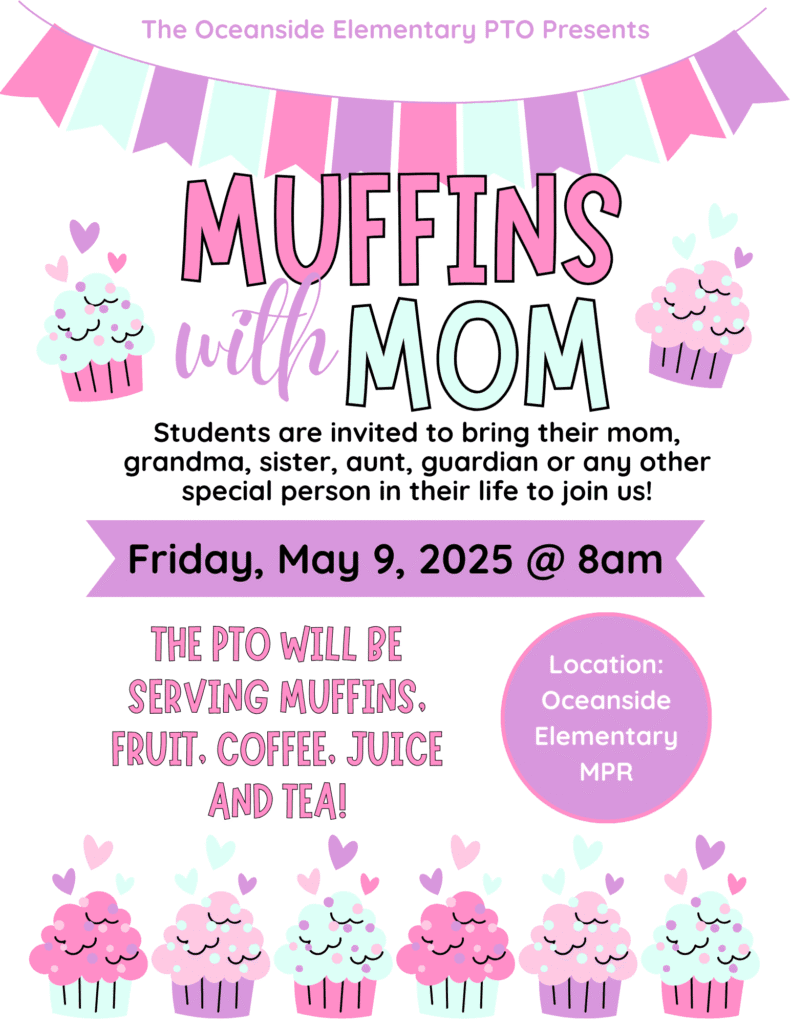
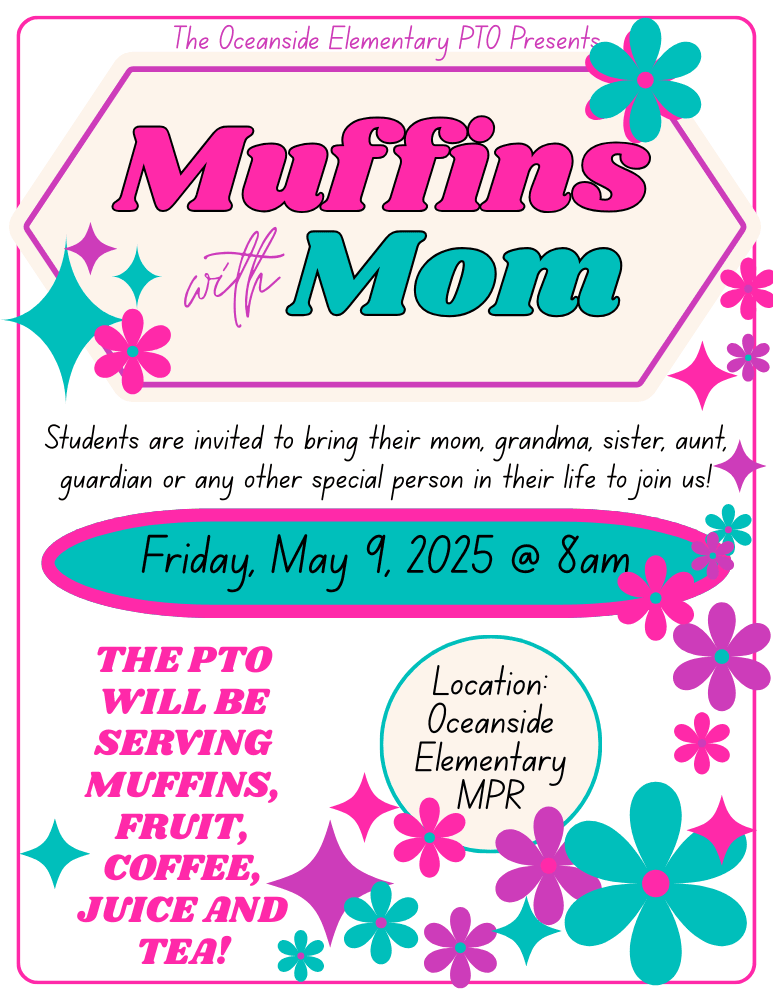
    Muffins With Mom Canva Flyer Templates on Etsy

    Mothers and their young children sit together at a picnic table in a sunny park for a “Muffins with Mom” school event, with a large banner and pastel balloons behind them. The group smiles and enjoys muffins and drinks, creating a warm, cheerful atmosphere.
An assortment of freshly baked muffins, including blueberry, chocolate chip, chocolate, and plain varieties, arranged on white plates on a wooden outdoor table with a beige cloth. The scene is sunlit with green grass blurred in the background.
  • Everything You Need to Host a Family Dance (Glow, Disco, Neon, etc.)

    Everything You Need to Host a Family Dance (Glow, Disco, Neon, etc.)

    A family dance is one of the easiest school events to host—even if you only have a tiny team, a small budget, or a multipurpose room that echoes. The reason these events work so well is simple:

    Kids love it. Parents love it. And the setup can be incredibly simple.

    Whether you’re planning a glow party, a disco night, a neon theme, or a general family dance, this guide walks you through exactly how to make it fun without draining your volunteer team.


    Before You Start: What Makes a Great Family Dance?

    From planning dozens of school dances, here are the three elements that matter most:

    1. Lighting over decorations

    Skip expensive décor—invest in glow sticks, LED lights, or a couple of spotlights. Lighting sets the mood instantly.

    2. Music parents and kids both know

    A mix of throwback favorites + current kid-friendly hits works perfectly.

    3. Clear space for dancing + seating

    You don’t need a “perfect” layout — just enough room for movement and a few chairs for tired adults.


    Simple Steps to Plan a Family Dance at School

    Step 1: Pick Your Theme

    You only need one of these—keep it simple:

    • Glow Dance
    • Neon Night
    • Disco Party
    • Black Light Bash
    • Family Dance Night (no theme needed)
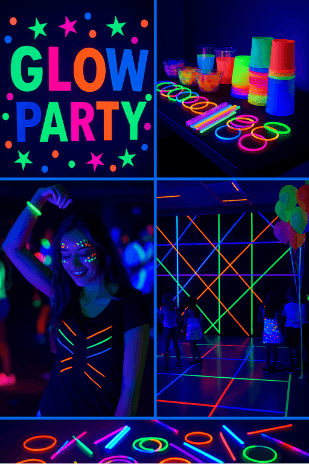
    A vibrant collage showcasing a glow party family dance theme under blacklight, featuring neon “Glow Party” signage, a table with glowing cups and glow sticks, a girl with neon face paint dancing, and a room decorated with bright fluorescent tape creating geometric patterns on the floor and walls.

    Step 2: Secure the Space & Equipment

    You’ll need:

    • Speakers or DJ (Bluetooth speaker works in small gyms)(Amazon)
    • Playlist or DJ bookmarks
    • Optional black lights or LED strips (Amazon)
    • Tables for glow sticks / concessions / water (Amazon)
    • Entry table for check-in or donations

    Step 3: Decide on Tickets or Donations

    Choose one:

    • Free event (most welcoming)
    • Suggested donation
    • Pre-sale tickets
    • At-the-door tickets

    If you’re fundraising, glow concessions sell extremely well.


    Step 4: Create a Simple Layout

    You only need:

    • Dance floor area
    • Seating around the perimeter
    • Concession area (There’s a great freebie for concession supplies in this blog here.)
    • Water station
    • Photo spot (optional but fun)

    Step 5: Promote the Event

    Send out:

    • Flyer
    • Social media post
    • School newsletter blurb
    • Teacher reminder
    • Front office posters

    Kids will remind their families once they’re excited.


    Step 6: Day-Of Setup

    Arrive 60–90 minutes early to:

    • Set up lighting
    • Test music
    • Place glow sticks and concessions
    • Put signs on bathrooms, exits, and water stations
    • Review roles with volunteers

    Step 7: Keep It Fun & Simple

    Your job is to set the vibe, not run activities.

    Optional add-ons (totally not required):

    • Dance-off
    • Limbo
    • Group dances (Cupid Shuffle, Cha Cha Slide)
    • Simple games between songs

    Common Mistakes to Avoid

    • Over-decorating (unnecessary)
    • Too many games (kids just want to dance)
    • Forgetting water
    • Not adjusting lights before families arrive
    • Starting late

    A family dance doesn’t need complicated décor or a huge team. With good lighting, fun music, and a simple layout, you can create a memorable event families look forward to every year.

  • School Spirit Week Guide: Easy Planning Tips for PTA and PTO Leaders

    A well-planned school spirit week guide makes it easy for PTA and PTO leaders to run a fun, memorable, and school-wide spirit week that families actually participate in. Spirit weeks can energize a campus, build community, and create excitement—but without a clear plan, they can also become chaotic, last-minute, and overwhelming for both teachers and parents.

    This simple guide walks you through how to organize a spirit week from start to finish, with easy steps, sample themes, and tips to keep everything low-stress and high-engagement.


    Why Schools Love Spirit Week

    Spirit weeks are a favorite tradition at elementary, middle, and high schools because they:

    • Strengthen school pride
    • Encourage student participation
    • Build community connections
    • Require minimal costs
    • Support positive school culture
    • Increase engagement with school events

    For PTA/PTO leaders, they’re also one of the easiest schoolwide programs to run—no fundraising, no complicated logistics, and lots of room for creativity.

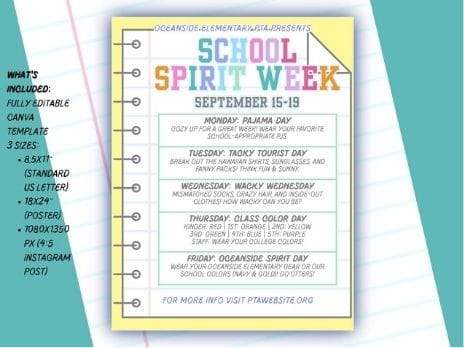
    Find this spirit week template and more in my Etsy shop.

    School Spirit Week Guide: How to Plan a Successful Spirit Week

    1. Choose the Dates Early

    Always start by choosing your timeline. Spirit weeks run most smoothly when families know the dates well in advance.

    Ideal times include:

    • The week before a big school event (like a jog-a-thon or fall festival)
    • Before winter break
    • During teacher appreciation week
    • During kindness month
    • Leading up to a pep rally or homecoming (middle/high school)

    Avoid weeks with:

    • State testing
    • Parent-teacher conferences
    • Minimum days
    • Holidays or shortened weeks

    Once dates are confirmed with your principal, everything else falls into place.


    2. Pick a Theme for the Week

    A strong theme helps your spirit week feel cohesive and fun. Choose one clear, campus-wide theme, or choose five stand-alone daily themes.

    Examples:

    Or skip a single theme and use a collection of classic daily favorites (crazy hair day, sports day, pajama day, etc.).


    3. Decide on Your Spirit Week Schedule

    Your school spirit week guide should include the full list of daily themes. Keep them simple so families aren’t stressed finding outfits.

    Common daily themes:

    • Monday: Pajama Day
    • Tuesday: Twin Day
    • Wednesday: Wacky Wednesday
    • Thursday: Team Spirit Day
    • Friday: School Colors Day

    Other easy, low-cost ideas:

    • Hat Day
    • Mismatch Day
    • Crazy Socks Day
    • Book Character Day
    • Career Day
    • Cozy Sweater Day
    • Rainbow Day
    • Decades Day

    Pro tip: Include at least two themes that require no special clothing (like “Color Day” or “Favorite Shirt Day”) to reduce financial pressure on families.


    4. Coordinate With Teachers and Staff

    Teachers appreciate being looped in early so they can plan ahead.

    Share with staff:

    • The full week schedule
    • Any expectations for their participation
    • A copy of the flyer or graphics
    • Information they can put in newsletters
    • Any classroom competitions or incentives

    Ask them:

    • Are any themes disruptive to lessons?
    • Do they prefer simpler themes?
    • Would they like a day to match their grade level or team?

    Collaboration ensures smoother implementation campus-wide.


    5. Create and Share Clear Communication

    Successful spirit weeks depend on simple, repeated communication.

    Use:

    • Flyers sent home
    • Posters around school
    • Social media graphics
    • Email reminders
    • Teacher newsletters
    • Classroom apps (ClassDojo, Remind, Seesaw)

    Families should know:

    • Dates
    • Themes
    • Dress expectations
    • Safety guidelines
    • Volunteer needs (if any)

    Make graphics bright, simple, and easy to read at a glance.

    Orrrr…… take a look at all of my flyer templates in my Etsy shop =)


    6. Include Students in the Fun

    Spirit weeks are more successful when students feel ownership. Let students help with:

    • Theme ideas
    • Daily announcements
    • Voting for their favorite theme
    • Designing posters
    • Creating videos for morning announcements

    If your school has leadership students, safety patrol, or a kindness club—let them help plan.


    7. Add Optional Competitions or Incentives

    Not required, but popular!

    Ideas:

    • Spirit participation tracker (per class or grade)
    • Golden Trophy for the most spirited class
    • Extra recess for highest participation
    • Spirit Week Champion banner
    • Raffle tickets for participating students

    Keep rewards simple and inclusive.


    8. Ensure Themes Are Accessible for All Families

    A school spirit week should never create a financial burden.

    Accessibility tips:

    • Avoid themes requiring costumes or special purchases
    • Use “color days” and “school pride day” to reduce cost
    • Offer a swap table for gently used outfits (like superhero shirts or wacky clothes)
    • Provide cheap/DIY idea lists
    • Allow students to participate in small ways (coloring, wearing a sticker, etc.)

    Spirit week should feel inclusive—not exclusive.


    9. Run the Week Smoothly With Daily Routines

    Each morning, have consistent routines:

    • Announce the day’s theme
    • Share a fun fact or cheer
    • Celebrate participation
    • Tease the next day’s theme
    • Offer reminders for upcoming events

    Your PTA can help by posting daily social updates with photos (with permission) and reminders.


    10. Collect Photos and Share Highlights

    Photos are gold for:

    • School newsletters
    • PTA social media
    • Future spirit week flyers
    • Year-end slideshows
    • Community-building

    Just follow your school’s photo permissions and privacy rules.


    11. Use Volunteers Wisely

    Your PTA doesn’t need a large team to run spirit week, but volunteers help with:

    • Designing flyers (I’ve done that for you here.)
    • Creating posters
    • Managing classroom competitions
    • Running a lunchtime selfie booth
    • Gathering participation data
    • Posting daily social media updates

    Micro-roles (10–20 minutes) increase participation from busy parents.


    12. Debrief and Save Everything for Next Year

    After spirit week:

    • Ask teachers what worked well
    • Ask students for feedback
    • Review participation levels
    • Note which days were most popular
    • Save all graphics, flyers, and schedules
    • Add notes to your PTA binder

    Next year’s planners will thank you.


    Sample School Spirit Week Schedule (Copy + Use)

    Monday – Pajama Day
    A low-stress, comfy start to the week.

    Tuesday – Crazy Hair Day
    Easy, creative, and fun for all ages.

    Wednesday – Color Day
    Each grade wears a different color.

    Thursday – Twin/Group Day
    Pair up with friends or match as a class.

    Friday – School Spirit Day
    Wear school colors, school shirts, or mascot gear.


    FAQ: Running a School Spirit Week

    How long should a school spirit week last?

    Five days is typical, but three-day versions also work well for busy schools.

    How do we increase participation?

    Make themes simple, communicate clearly, and include teachers in the planning.

    Should we offer prizes?

    Prizes help but aren’t required. Simple recognition works well.

    What’s the easiest theme for families?

    Pajama Day, Crazy Socks Day, and School Colors Day are universally easy.

    Can elementary and middle schools run the same themes?

    Yes—just adjust the messaging to fit the age group.

    You might also like:

    Class Party Guide: Easy Themes, Timelines, and Parent Communication

    Muffins with Mom (Simple Morning Event Guide)

    Popsicles on the Playground (Easy Back-to-School or End-of-Year Event)

    Everything You Need to Host a Family Dance (Glow, Disco, Neon, etc.)

    How to Run a School Movie Night (Easy, Family-Friendly Event Guide for PTA/PTO Volunteers)

  • Class Party Guide: Easy Themes, Timelines, and Parent Communication

    Class parties should be fun—not overwhelming. After years of helping teachers and room parents coordinate celebrations, I’ve learned this:

    The best classroom parties are simple, structured, and minimal-impact for teachers.

    Here are easy class party ideas that work in any grade and require very little prep.


    The Secret to a Great Class Party

    Three things matter most:

    1. Short activities

    Kids lose attention fast. Keep things moving.

    2. Minimal mess

    Teachers appreciate activities that don’t require 20 minutes of cleanup.

    3. Clear structure

    Break the party into 3–4 stations or activities.


    Simple Class Party Ideas (Kid-Approved + Low-Stress)

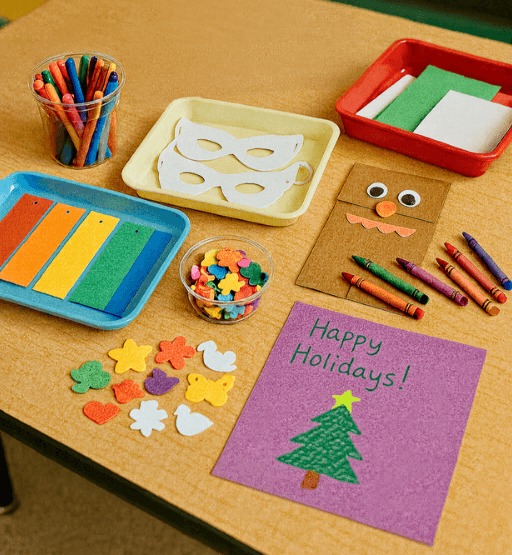
    1. Craft Stations (with pre-cut supplies)

    • Bookmark decorating
    • Simple foam sticker crafts
    • Color-your-own masks
    • Paper bag puppets
    • Holiday card-making

    Pro tip: Pre-cut everything.

    A class party craft table filled with pre-cut supplies, including colorful paper bookmarks, foam sticker shapes, white paper masks, a paper bag puppet, crayons, holiday card materials, and small trays of craft pieces, arranged neatly on a light wooden surface with a chair and tan brick wall in the background.

    2. Game Stations

    • Cup stacking (Amazon)
    • Ring toss
    • Bingo
    • Minute-to-win-it challenges
    • Beanbag toss

    Games keep energy positive and structured.


    3. Snack Stations

    Make them simple:

    • Fruit kabobs
    • Popcorn cups
    • Graham crackers + frosting + sprinkles
    • Trail mix bar (nut-free options!)

    Use small portions to reduce mess.


    4. STEM or Quiet Stations

    Great for mixed-energy classes:

    • Building with toothpicks + marshmallows
    • LEGO challenge cards
    • Simple origami
    • Puzzle table

    5. Reading or Coloring Corner

    Helpful when kids need downtime.

    • Themed coloring sheets
    • Seasonal storybooks
    • Cozy blankets or pillows from home
    • I’ve never seen a comfy corner without one of these: (Amazon)

    Sample 4-Station Party Layout

    • Station 1: Craft
    • Station 2: Game
    • Station 3: Snack
    • Station 4: Quiet/STEM

    Rotate every 10–12 minutes.


    Simple Christmas Classroom Party Activities Kids Always Love

    If you’re planning a simple Christmas class party and need activities that are easy to prep, low-mess, and fun for every grade level, these ideas work beautifully—even if you only have a few parent volunteers. Each one uses inexpensive supplies and keeps kids engaged without overwhelming you or your classroom.

    Ornament Decorating

    A quick, low-prep craft that doubles as a keepsake. Set out wooden or plastic ornaments, markers, ribbon, and a few sticker sheets. Kids love taking these home to hang on their tree.

    Holiday Card-Making

    Perfect for early finishers and something kids of all ages can do independently. Provide pre-cut shapes, glue sticks, crayons, and holiday stamps so students can create cards for family, teachers, or a local nursing home.

    Gingerbread Houses (No-Bake)

    Use graham crackers, frosting “glue,” and candy pieces to build mini gingerbread houses. This Christmas classic feels magical for kids while staying simple for adults with the right prep.

    Christmas Bingo

    A classroom favorite that works well for mixed ages. Print a few different bingo cards, grab some small prizes, and kids can play in rounds while volunteers help call out the squares.

    Reindeer Ring Toss

    A fun movement-based game that burns off some class party energy. Use an antler headband or a simple cardboard cutout and let kids toss rings to score points.

    Snowball Toss

    Quick to set up and perfect for indoor play. Students toss cotton “snowballs” into buckets or hoops at varying distances to earn points.

    Cozy Holiday Read-Aloud

    If your class party needs a quiet, calm moment, a festive read-aloud corner with pillows, blankets, and Christmas books resets the group and gives everyone a little breather.

    Santa’s Workshop Craft Stations

    Rotate students through three simple craft tables—foam stickers, bookmarks, ornaments, or mask decorating. Keeping everything pre-cut ensures quick flow and zero chaos.

    Sugar cookies, small tubs of frosting, and sprinkles turn into an instant crowd-pleaser. Keep baby wipes or damp cloths handy for easy cleanup.

    North Pole Photo Booth

    Set up a quick backdrop with wrapping paper and holiday props like Santa hats or signs. This makes a cute memory without needing a professional setup.

    Christmas Scavenger Hunt

    Hide small holiday items around the classroom—bells, stockings, mini trees—and give kids a printed checklist to complete. Works great as a group or individual challenge.


    Common Mistakes to Avoid

    • Too many sugary treats
    • Activities that take too long
    • Craft supplies that require glue (avoid if possible)
    • No structure—kids need clear transitions

    Classroom parties don’t need over-the-top themes or complicated crafts. Simple, structured stations make kids happy and keep teachers stress-free.

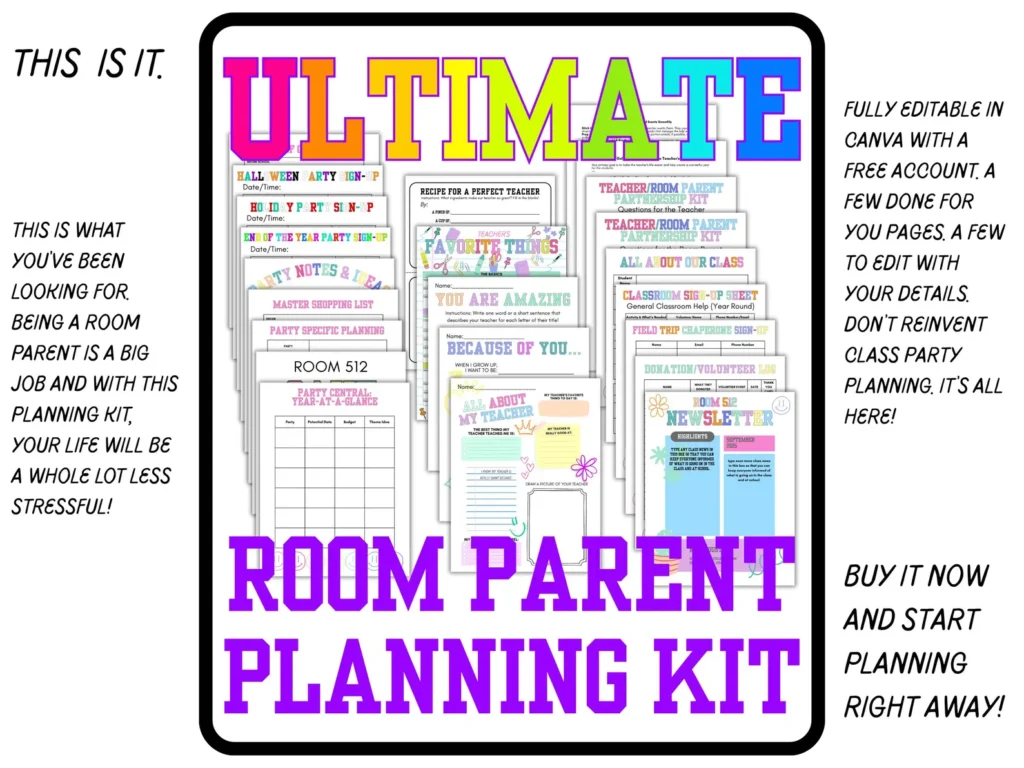
    Get your Ultimate Room Parent Planning Kit below!

    Related Post: Room Parent 101: First Steps & Responsibilities Explained Clearly

  • What Every Event Coordinator Needs in Their Toolkit

    Planning school events, fundraisers, or community nights becomes so much easier when you have the right tools at your fingertips. Whether you’re a seasoned PTA leader or a brand-new volunteer stepping into an event role for the first time, having a reliable event coordinator toolkit saves time, reduces stress, and keeps everything running smoothly.

    Here’s exactly what every event coordinator should have on hand to stay organized, prepared, and ready for anything.


    1. A Centralized Planning Binder or Digital Hub

    Your first essential tool in your toolkit is a single place to keep everything:

    • Master calendar
    • Volunteer list
    • Vendor contacts
    • Budget notes
    • Event checklists
    • Copies of flyers, graphics, and forms

    A printed binder works beautifully for quick meeting access, while a digital hub (Google Drive, Dropbox, Notion, etc.) makes sharing effortless. The best approach? Use both so you’re prepared whether you’re at your computer or on campus.


    2. Event Checklists for Every Stage

    Even the most experienced coordinator benefits from checklists. They help you:

    • Plan ahead
    • Avoid missed steps
    • Delegate clearly
    • Stay on track during busy seasons

    Your toolkit should include:

    • Pre-event checklist
    • Day-of checklist
    • Volunteer assignments checklist
    • Cleanup/closing checklist
    • Post-event debrief notes

    These predictable routines keep things running smoothly, even when volunteers rotate in and out.

    You might also like:

    Everything You Need to Host a Family Dance (Glow, Disco, Neon, etc.)

    How to Run a School Movie Night (Easy, Family-Friendly Event Guide for PTA/PTO Volunteers)

    Class Party Guide: Easy Themes, Timelines, and Parent Communication

    Muffins with Mom (Simple Morning Event Guide)

    Popsicles on the Playground (Easy Back-to-School or End-of-Year Event)


    3. A Reliable Volunteer Communication System

    Clear communication prevents 90% of event-day chaos. Choose a method that works well for your community, such as:

    • Email list
    • Remind or ClassDojo groups
    • WhatsApp or text group
    • PTA Facebook group
    • Signup platforms with built-in messaging (SignUpGenius, SignUp.com)

    Your toolkit should include prewritten templates for:

    • Volunteer reminders
    • Setup instructions
    • Time-slot confirmations
    • “We still need help!” posts

    Consistency keeps everyone informed and reduces your last-minute stress.

    Having a hard time getting volunteers to show up? Read How to Recruit School Volunteers Without Begging or Guilt-Tripping


    4. A Portable Event Supply Kit

    Every event coordinator eventually creates a go-bag! Stock it with the tools you always end up needing:

    • Scissors
    • Tape (painter’s, packing, masking)
    • Sharpies + pens
    • Zip ties
    • Extra paper
    • Safety pins
    • Extension cords
    • Phone charger
    • Hand sanitizer
    • Name tags
    • Snacks for volunteers

    Keep it in a clear bin or backpack so it’s ready for any event—big or small.

    We just bought one of these (Amazon link) and it’s already been a lifesaver. I don’t know how many time I said, “Anyone have any zip ties with them?” last year. Now, we’re never without them. It stores nicely and keeps everything organized without having to lug around a bulky wagon or bags of supplies.


    5. Templates for Flyers, Signs, and Social Media

    A well-organized event coordinator has a library of reusable templates to save hours of design time. These might include:

    • Event flyers
    • Directional signage
    • Volunteer station signs
    • Social media graphics
    • Donation request letters
    • Thank-you notes for sponsors and volunteers

    Having consistent, branded materials boosts your event’s professionalism and keeps families informed.

    I’ve got a flyer template for (almost) everything in my Etsy shop. If you need one that you don’t see, please send me a message on Etsy!


    6. A Budget & Expense Tracker

    Even if your PTA/PTO has a treasurer, coordinators need visibility into:

    • How much budget is approved
    • What vendors charge
    • What supplies cost
    • What donations you’ve secured
    • How much the event earned (if applicable)

    A simple spreadsheet or Google Sheet keeps everything transparent—and makes next year’s coordinator’s job 10x easier.


    7. Post-Event Evaluation Tools

    Strong events get better every year, and that happens through reflection. Your toolkit should include:

    • A quick volunteer feedback form
    • Notes about what worked & what didn’t
    • Attendance numbers
    • Supplies used vs. leftover
    • Budget-to-actual comparison
    • Ideas for next time

    These wrap-up notes become gold for future coordinators and help your PTA improve event quality over time.


    Final Thoughts

    Being an event coordinator doesn’t require perfection—it just requires preparation. With the right toolkit, clear systems, and a few essential supplies, you can run smooth, successful events without feeling overwhelmed.

    And when your school’s events go well? Families notice. Teachers appreciate it. Volunteers return. Your entire community benefits.

    Now get planning! Everything You Need to Host a Family Dance (Glow, Disco, Neon, etc.)

  • Community Craft Fair: A Step-by-Step Guide to Hosting a Successful School Event

    A community craft fair is one of the most fun, collaborative events a PTA or PTO can host. It brings families together, showcases local talent, supports small businesses, and helps raise money for your school—all while building a strong sense of community. Craft fairs work well at schools of every size because they’re flexible, beginner-friendly, and easy to scale based on your volunteer capacity.

    Whether you’re starting from scratch or improving an annual tradition, this guide walks you through exactly how to organize a successful community craft fair at your school.


    Why Host a Community Craft Fair at School?

    Craft fairs are popular because they offer benefits for the entire school community:

    • Fundraising opportunities through booth fees, raffles, concessions, or donation tables
    • Support for local crafters and artisans, especially parents or staff
    • Family-friendly atmosphere that boosts school culture
    • A chance for students to showcase creativity through art, crafts, or mini-shops
    • Low-cost event setup with high potential turnout
    • Flexibility—indoor, outdoor, or hybrid

    Parents love events that feel local and meaningful, and a craft fair checks every box.


    Step-by-Step: How to Organize a School Community Craft Fair

    1. Define Your Event Goals and Format

    Before booking crafters or designing sign-up forms, decide what type of craft fair you want to host.

    Questions to consider:

    • Is this a fundraiser, community event, or vendor showcase?
    • Will vendors pay a booth fee?
    • Will your school sell concessions, raffle baskets, or spirit wear?
    • Should students participate with their own craft booths?
    • Will the fair be indoor, outdoor, or both?

    Clear goals help you budget, plan staffing, and communicate expectations.


    2. Choose a Date, Time, and Location

    Craft fairs work best during:

    • Late fall (holiday shopping)
    • Early spring
    • Weekends or weeknights when families are available

    Ideal locations:

    • Multipurpose room
    • Gym
    • Courtyard
    • Hallways
    • Cafeteria

    Make sure the space has:

    • Electrical access for vendors
    • Restrooms
    • Parking
    • Accessible pathways

    The earlier you confirm your location with school administration, the easier the rest of your planning becomes.


    3. Recruit a Craft Fair Committee

    Running a community craft fair is smoothest when you divide responsibilities.

    Suggested roles:

    • Vendor coordinator
    • Marketing & communication lead
    • Volunteer coordinator
    • Decorations & setup lead
    • Treasurer (to handle payments)
    • Student booths coordinator (optional)

    This reduces burnout and helps each volunteer focus on a manageable area.


    4. Set Vendor Guidelines and Booth Fees

    Decide:

    • How many vendor spaces you will offer
    • The cost per booth (popular rates are $25–$75, depending on table size and expected turnout)
    • Whether student booths are free
    • What vendors must bring (tables, chairs, display items)
    • What the PTA/PTO will supply (electricity, Wi-Fi, chairs, signage)
    • If duplicate product types are allowed (e.g., only one candle vendor)
    • Whether you’re prioritizing local or school-community vendors

    Write guidelines clearly to avoid misunderstandings later.


    5. Create Vendor Applications and Collect Payments

    Use simple digital forms (Google Forms, Jotform, Cheddar Up) to collect:

    • Contact information
    • Business name
    • Product descriptions
    • Social media or website links
    • Photos of their work
    • Special space/electrical needs

    For payments, offer options:

    • Online payments
    • Checks
    • School district-approved systems

    Pro tip: Approve vendors on a rolling basis and maintain a waitlist once full.


    6. Plan the Craft Fair Layout

    A well-planned layout makes or breaks your event.

    Include:

    • Vendor booth map
    • Traffic flow path
    • Entrances and exits
    • Student booth area (if included)
    • Raffle or silent auction tables
    • Concessions
    • Seating for families
    • Information booth

    If outdoors, plan for:

    • Weather
    • Shade tents
    • Power access
    • Emergency pathways

    Use painter’s tape or chalk to mark booth spaces during setup.

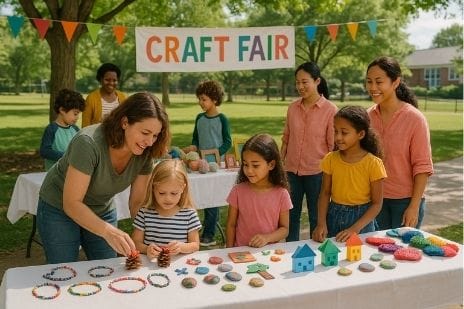
    outdoor community craft fair booth

    7. Recruit Volunteers

    Volunteers can help with:

    • Set-up and clean-up
    • Vendor check-in
    • Running the concession stand
    • Managing raffle baskets
    • Helping student vendors
    • Working the welcome table
    • Overseeing parking or crowd flow

    Post sign-up links early and often. Micro-volunteer roles (30-minute shifts) increase participation dramatically.


    8. Market the Event to Families and the Community

    Use multiple communication channels:

    • School newsletters
    • PTA/PTO email lists
    • Flyers sent home
    • Social media event pages
    • Local community groups
    • District event calendars
    • Posters around town
    • Content spotlighting featured vendors

    Marketing tip: Vendors are your biggest promoters—give them shareable graphics.


    9. Add Fun Extras to Boost Engagement

    A community craft fair becomes more memorable when it includes small, family-friendly touches:

    • Live music from the school band or choir
    • Photo booth
    • Hot cocoa or snack cart
    • Kids’ craft station
    • Student demonstrations (art, pottery, robotics)
    • Raffle baskets
    • Silent auction
    • Gift-wrapping station

    These elements increase foot traffic and improve overall experience.


    10. Day-of Logistics and Smooth Operations

    To make event day stress-free, prepare:

    • A printed vendor list
    • Booth map copies for check-in
    • Name tags or booth signage
    • Cash box (if selling concessions or raffle tickets)
    • Extra extension cords
    • Trash and recycling bins
    • Volunteer badges
    • A central information table

    Have volunteers ready to:

    • Greet vendors
    • Answer questions
    • Provide breaks for solo vendors
    • Monitor restrooms and common areas
    • Handle safety and emergency needs

    A calm, visible PTA presence keeps everything running smoothly.


    11. Collect Feedback and Debrief

    After the craft fair:

    • Send vendors a short feedback form
    • Ask volunteers what worked well
    • Document challenges
    • Note which booth types were most popular
    • Review overall fundraising totals
    • Record recommendations for next year

    Add all debrief documents to your PTA binder so future planners have everything they need.


    12. Celebrate Your Community’s Success

    Finish strong by sharing appreciation:

    • Thank vendors on social media
    • Highlight student booths
    • Share photos
    • Thank volunteers and staff
    • Post fundraising totals if relevant

    Public recognition strengthens relationships and encourages continued participation.


    FAQ: Organizing a Community Craft Fair at School

    How far in advance should we plan the craft fair?

    Most PTAs start planning 2–4 months ahead, depending on event size.

    How do we find vendors?

    Start with school parents, then post applications publicly in local groups and maker communities.

    How many vendors should we allow?

    It depends on your space. Most schools host 20–60 vendors.

    Do we need insurance or district approval?

    Many districts require facility permits and insurance for vendors. Check policies early.

    What should booth fees cover?

    They should cover event costs (custodial fees, supplies) and ideally raise funds for your PTA/PTO.


    Other fun PTA events:
    Popsicles on the Playground (Easy Back-to-School or End-of-Year Event)

    Muffins with Mom (Simple Morning Event Guide)

    Everything You Need to Host a Family Dance (Glow, Disco, Neon, etc.)

    How to Run a School Movie Night (Easy, Family-Friendly Event Guide for PTA/PTO Volunteers)