A PTA meeting agenda is the number-one tool for running a PTA/PTO meeting that actually ends on time, stays focused, and keeps parents engaged. If you’ve ever sat in a meeting that ran 30–40 minutes over because the discussion wandered, people repeated themselves, or nobody knew which topic came next—you know exactly why a structured agenda is essential.
Ending on time isn’t about rushing people or shutting down good ideas. It’s about respecting volunteers’ time, creating a predictable flow, and following a simple system so every parent leader feels prepared and confident. Below, you’ll find a practical, parent-friendly guide to help you run shorter, smoother PTA meetings that still accomplish everything you need.
Table of Contents
Why a PTA Meeting Agenda Helps You End on Time
A PTA meeting agenda acts like a roadmap. It gives your board and members clarity about:
- What’s being discussed
- How long each section will take
- Which items require votes
- What needs to be handled offline
- When the meeting will end
Here’s why that matters:
1. Predictability reduces side conversations
When everyone knows the flow of the meeting, there’s less interruption and fewer “Actually, can I add one more thing?” moments.
2. Time limits keep enthusiasm from turning into chaos
PTA volunteers are passionate—which is great—but without boundaries, a short update can turn into a 15-minute debate.
3. Your principal appreciates it
School administrators want to support you, but they also have a full plate. Ending on time shows professionalism and strengthens your relationship.
4. Parents are more likely to attend future meetings
If they know meetings consistently end on time, your attendance improves. When parents don’t know what to expect, they stop showing up.
You might also like:
PTA vs PTO: What’s the Actual Difference? (Simple Explanation)
How to Build a Yearlong Master Plan for Your PTA/PTO
Simple PTO/PTA Budget Guide for New Parent Leaders
The Ideal Length for a PTA or PTO Meeting
Aim for 45–60 minutes, including:
- Welcome
- Reports
- Committees
- Votes
- Announcements
- Q&A
A meeting doesn’t have to be long to be productive. Most schools find that tighter, more structured meetings lead to better decisions and happier volunteers.
How to Build the Perfect PTA Meeting Agenda
If you want a PTA meeting to run efficiently, the PTA meeting agenda needs to be clear, organized, and distributed before the meeting. Here’s the structure that works best for most parent groups.
1. Start with a short, clear welcome
- State the meeting start time
- Quickly introduce officers if needed
- Acknowledge new members
- State the end time upfront (“Today’s meeting will run from 6:00–7:00 PM.”)
2. Approve the previous meeting’s minutes
This should take 1 minute, not 15. Avoid rehashing the last meeting—just approve and move on.
3. Treasurer’s Report (5 minutes max)
Include:
- Year-to-date balance
- Major recent expenses
- Upcoming budget items
- Votes if needed
If there’s a detailed spreadsheet, attach it to the agenda so you don’t spend the entire meeting reviewing numbers.
4. Principal’s Report (5 minutes max)
Ask your principal to share key highlights—not a full school update. This keeps the meeting parent-focused and on schedule.
5. Committee Reports (10–15 minutes total)
Use strict time caps. For example:
- Fundraising: 3 minutes
- Events: 3 minutes
- Membership: 3 minutes
- Teacher appreciation: 3 minutes
Before the meeting, ask committee chairs to send updates in writing so you can keep live reports brief.
6. Old Business (5 minutes max)
Only discuss items that truly need a follow-up decision or vote. Everything else can be summarized in email.
7. New Business (10–15 minutes max)
This is where debates happen—so set boundaries:
- Identify which items require a vote
- Set a timer for longer discussions
- Redirect off-topic questions
If a topic gets unwieldy, move it to a smaller working session or committee meeting.
8. Q&A (3–5 minutes)
This prevents parents from interrupting the entire meeting to ask questions.
9. Announcements + Adjournment
End on time even if you didn’t finish everything. You can always add items to the next agenda or assign them to committees.
Tips for Keeping PTA Meetings on Schedule
1. Distribute the agenda 3–5 days in advance
Parents are far more prepared (and far less chatty) when they know what’s coming.
2. Use time limits for every section
For example:
- Welcome (2 minutes)
- Treasurer (5 minutes)
- Committees (12 minutes)
- New business (10 minutes)
Share these limits on the agenda so members know what to expect.
3. Start on time even if not everyone has arrived
If people know you always start promptly, they’ll adjust.
4. Appoint a “timekeeper”
This can be:
- Your secretary
- Your vice president
- A trusted volunteer
Their job is to give you subtle cues when it’s time to move on.
5. Ask for written updates to avoid long verbal reports
Most information can be handled by email.
6. Use parking lot notes
If someone brings up a topic that isn’t on the agenda, say:
“We’ll put that in the parking lot and revisit it later if time allows.”
7. Reduce open discussion time
Structured discussion always moves faster than open-mic conversation.
The Secret: Prepare More Outside the Meeting
The best way to end a PTA/PTO meeting on time is to make sure the real work happens before the meeting:
- Committee chairs submit updates early
- You meet with your principal beforehand
- You handle vendor questions and budgets by email
- You confirm upcoming event dates outside the meeting
- You send reminders to parents about votes, agenda items, or forms
Meetings should be for decisions, not endless updates.
Sample PTA Meeting Agenda (Copy + Paste)
Use this template at your next meeting:
PTA Meeting Agenda
- Call to Order
- Approval of Minutes
- Treasurer’s Report
- Principal’s Report
- Committee Reports
- Old Business
- New Business
- Announcements
- Q&A
- Adjournment
Common Mistakes That Make PTA Meetings Run Long
Even experienced PTA boards can fall into these traps:
• Allowing open discussion too early
Wait until the agenda is complete before taking general comments.
• Including too many updates
Updates ≠ decisions. Put non-essential updates in email.
• Adding last-minute agenda items
This derails your timing every time.
• Not giving committee chairs time limits
They will talk until stopped—they mean well!
• Letting small votes turn into big debates
If it’s not a significant item, keep the vote simple and swift.
• Not redirecting off-topic questions
A simple “Let’s circle back to the agenda” keeps things on track.
FAQ: How to Run a PTA/PTO Meeting That Ends on Time
How long should a PTA meeting last?
Most successful meetings are 45–60 minutes. Anything longer decreases engagement.
How do we get parents to stop talking over each other?
Use a written agenda, time limits, and a designated facilitator to redirect conversation.
What if someone keeps bringing up off-topic issues?
Use “parking lot” notes to save the topic for later and move on.
How early should the PTA meeting agenda be shared?
Ideally, 3–5 days in advance so everyone arrives prepared.
How can we make decisions faster?
Share background information by email before the meeting so you don’t spend time explaining it live.
Further reading: How to Build a Yearlong Master Plan for Your PTA/PTO
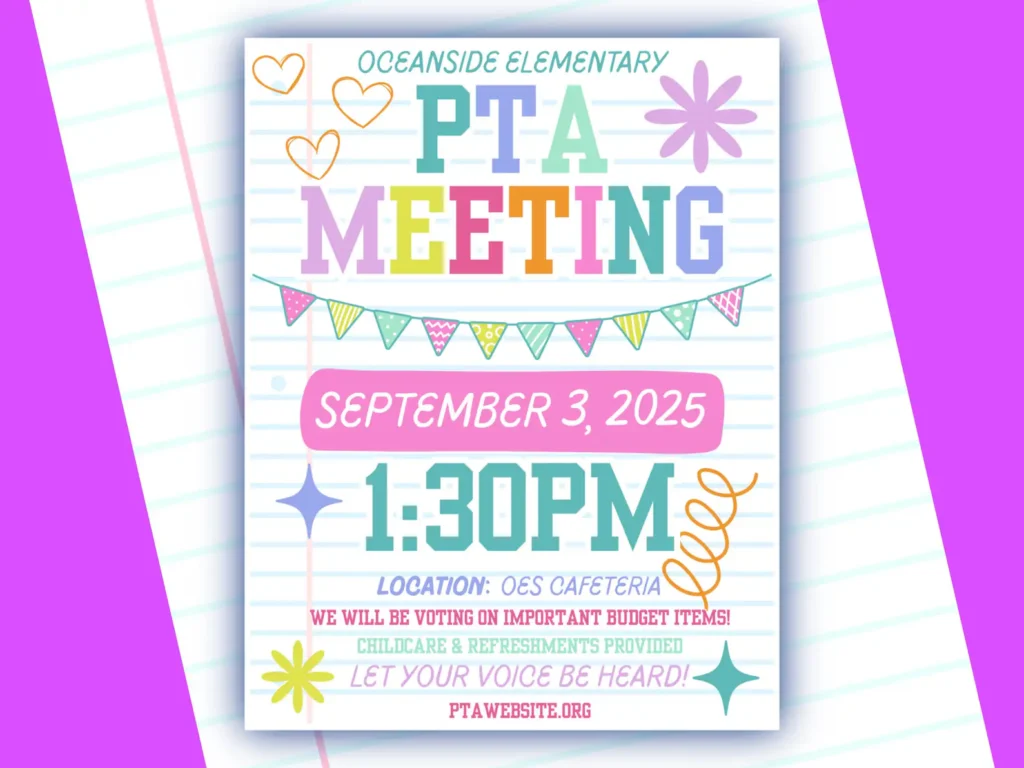
Click the image below to get a PTA meeting flyer template from my Etsy shop.
Leave a Reply
You must be logged in to post a comment.